

For many fly tiers—especially those who pursue large trout, steelhead, salmon, bass, and saltwater species—flash materials are absolutely essential. They add life, movement, and attraction. They create the illusion of scales, light shimmer, and fleeing prey. And when used with intention, flash transforms a good fly into a fly that triggers predatory instincts in the most challenging fish.
Whether you're at the vise after a long workday or preparing for a bucket-list trip to Alaska, Labrador, or the Caribbean, flash materials allow you to craft patterns that ignite confidence on the water. And for the fly tyer who values craftsmanship, meaningful outdoor experiences, and reliable, premium materials, understanding flash options is not just helpful—it’s empowering.
This guide covers 10 of the most important flash materials for streamer, trout, steelhead, salmon, and saltwater fly tying, including their characteristics, advantages, drawbacks, and ideal applications.
Why Flash Matters
To the discerning tyer—someone who values quality, mastery, and reliable performance—flash is more than just glitz. It's about:
- Mimicking natural baitfish flash points
- Replicating the way light hits real scales
- Creating movement and pulsation that breathes underwater
- Enhancing contrast and triggering predator responses
- Matching the shimmer of crustaceans in saltwater
- Increasing visibility in deep or off-color water
For anglers who travel, pursue wild fish, and need confidence in their patterns—flash materials are a critical part of the craft.
10 Core Flash Materials Every Streamer and Salmon Tyer Should Know
Below are the most widely used flash materials in freshwater fly tying.
- Flashabou
.png)
The classic. Flashabou is the most recognized flash material worldwide and a staple in streamers and salmon patterns.
"Made of soft, durable mylar strands, Flashabou is less stiff than other flash materials, allowing it to flow and move like marabou in the water"
Benefits
- Incredibly luminous, producing high-shine reflections
- Moves fluidly in water
- Available in hundreds of colors and blends
Drawbacks
- Can be too flashy for heavily pressured or clear water conditions
- Slightly fragile if tied too short or overworked
Best Uses
- Large streamers, salmon intruders, pike flies, steelhead patterns
- Lateral lines and baitfish accents
2. Krystal Flash
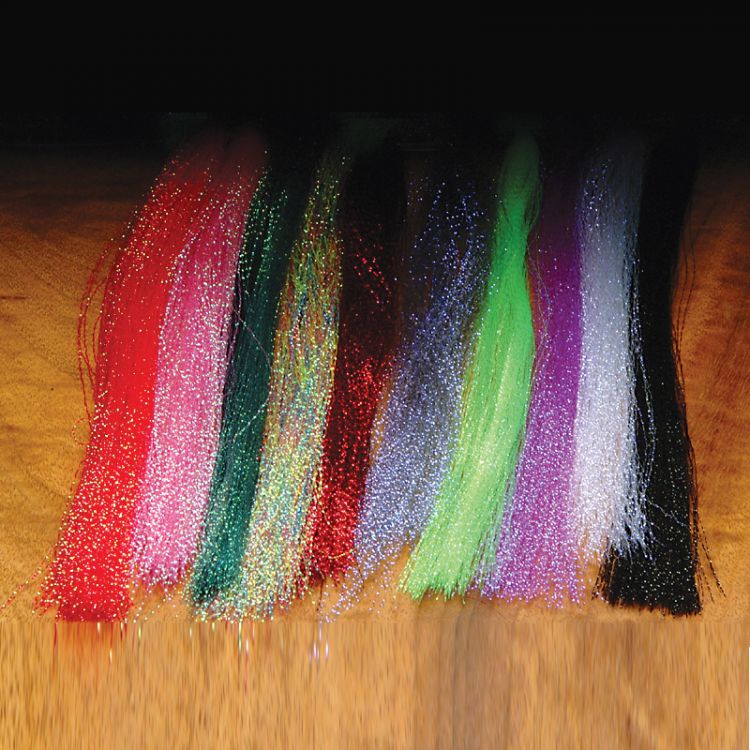
Made from twisted fibers that create a crinkled appearance with multi-directional shine
"Krystal Flash consists of fine strands of reflective mylar that imitate the appearance of fish scales or "aliveness" underwater, which predatory fish find irresistible. Unlike natural fibers, this synthetic material doesn't become waterlogged and retains its reflective properties and shape in the water, making it a durable choice"
Krystal Flash is very popular among salmon fly tyers for adding a little "punch" to their flies.
There are a few variations available outside of Harelines product which is the most recognized as the standard. Hends for instance makes a great Krystal Flash product in multiple sizes. Even in its standard size I find it is finer thatn Hareline but has the stiffness and shine that makes it preferred by many - me included. (Some of Hends flash products will be available from DcTackle in 2026 so keep an eye out!)
Benefits
- Subtle yet eye-catching sparkle
- Extremely strong and durable
- Great for wings, tails, and ribbing
Drawbacks
- Can cause bulk if overused
- Stiff enough that it may splay unnaturally on small flies
Best Uses
- Steelhead wings, trout minnows, nymph legs, salmon wings
3. Krinkle Mirror Flash
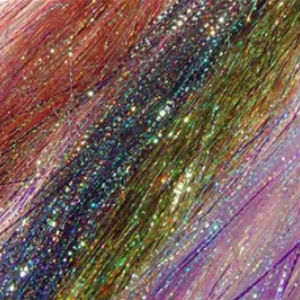
"The key feature is its slight crimp or crinkled texture, which enhances its reflective qualities and gives a segmented, scale-like effect"
A modern variation of flash with micro-edges that reflect light sharply.
.jpg) This has become one of my favorites and its added to "all" my hairwing streamers. Example to the left - Rainbow Smelt Hairwing.
This has become one of my favorites and its added to "all" my hairwing streamers. Example to the left - Rainbow Smelt Hairwing.
The key with this material is a "little goes a long way". I use 3-4 strands folded over at the most and I find this is more than enough.
The kink effect in the strand reflects light very well and accents the flash more than any other. t least thats my opinion!
Benefits
- Highly reflective without being gaudy
- Movements mimic real baitfish scales
- Excellent for clear water
Drawbacks
- Slightly more rigid than Flashabou
- Don’t overdress—it can overwhelm small patterns
Best Uses
- Trout streamers, smelt patterns, modern salmon designs
4. Ice Wing Fiber / Ice Dub Flash Strands
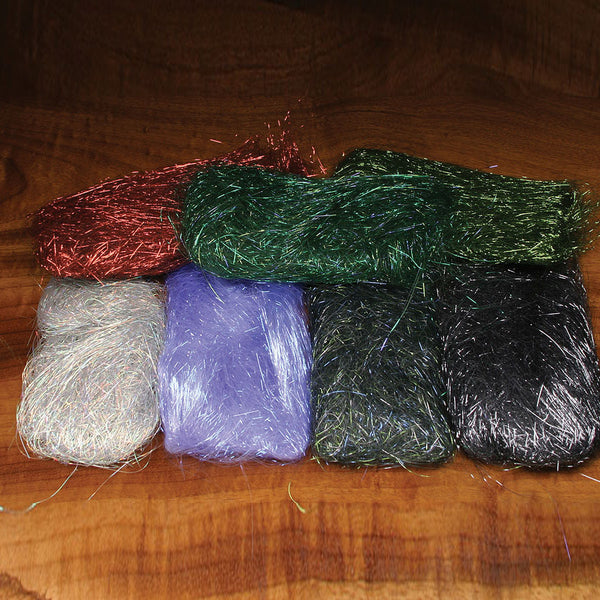 Ice Wing Fiber
A synthetic material designed originally for dubbing but now used in long-fiber formats.
Much like Angel Hair I have used it for both wing accents as wells as throats (Red especially)
Essentially a longer strand version of Ice Dub for thse who are familair with the Ice Dub product.
Benefits
- Sparkles with a frosted effect
- Blends beautifully with natural hair
- Great volume and body
Drawbacks
- Not ideal for sparse patterns
- Can tangle if stored poorly
Best Uses
- Steelhead flies, baitfish heads, bulky streamers
5. Holographic Flash
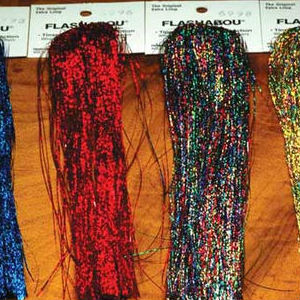 Holographic Flashabou - by Hedron
This is available in a number of different forms. The one noted in the above picture is Holographic Flashabou but there are many different variations of flash which use the "holographic" title.
The "Holo. Flashabou" is a favorite of mine especially in Bright Rinbow. I use it in 99% of my freshwater streamers. I was put on to this material by an American fisherman who I had the pleasure of tying some "Big Brookie" flies for him back in the 90's when he did some fishing in the Minipi watershed. He swore by the material and especially liked it to be added to his streamer requests in large quantities. If I remember correctly he used the phrase "as much as you can pack on the fly"
I only use it sparingly myself but have not wavered from its use for some 20+ years now
Available as strands, tinsels, and sheets.
Benefits
- 3D holographic shine that imitates iridescence
- Extremely visible in off-color rivers
- Comes in various widths
Drawbacks
- Can dominate a pattern if misused
- Wide widths may be too stiff for small streamers
- Has a tendency to "stick" together. I usually run a fine comb through it before use to separate the strands. I fine dog fle comb works great and can be picke up at your local pet store
Best Uses
- Large predator streamers, salmon patterns, ribbing
6. Angel Hair
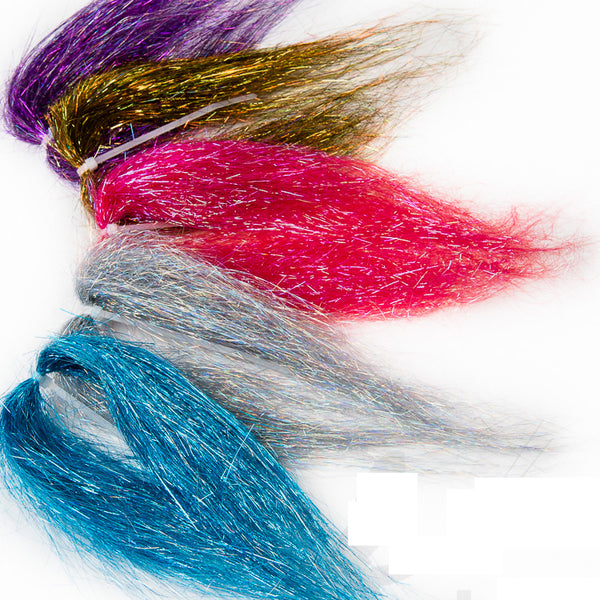
A mix of ultra-fine, lightweight fibers.
I have used this quite often over the years and especially like the red for throats on my streamer patterns. There are a few different variations out there but make sure you choose "Angel Hair" as its much softer than some of its close cousins.
"It consists of ultra-fine, reflective mylar fibers that add sparkle and translucence to artificial flies, mimicking the shimmer of natural baitfish scales"
I have also use the ice wing fiber in simliar applications. Both products are great!
Benefits
- Breathes effortlessly underwater
- Provides “internal glow” when blended into wings
- Very lightweight, great for larger flies
Drawbacks
- Can be messy to work with
- Hard to maintain sparsity without practice
Best Uses
- Intruders, composite loops, long-wing patterns
7. Polar Flash
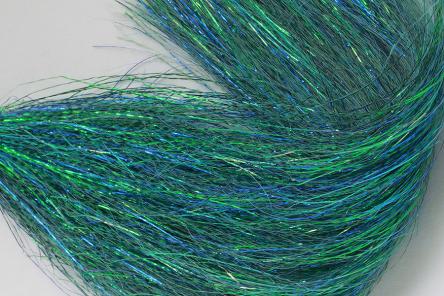
A soft, fine flash material with subtle shimmer
Polar Flash "consists of micro nylon filaments tightly wrapped around strands of Flashabou, which increases its strength and light-diffusing properties, creating a subtle pearlescent sheen and movement in the water"
I use Polar Flash in many of my wool buggers (Tail accents) and Zuddler Sclipins (Wing Accent). I find it to give just enough flash without it too pronounced.
Benefits
- Great for natural-looking baitfish
- Not overly reflective—ideal for spooky fish
- Easy to blend with natural fibers
Drawbacks
- Not dazzling enough for stained water
- Limited color range compared to Flashabou
Best Uses
- Trout streamers, sculpins, smelt patterns
8. Lateral Scale Flash
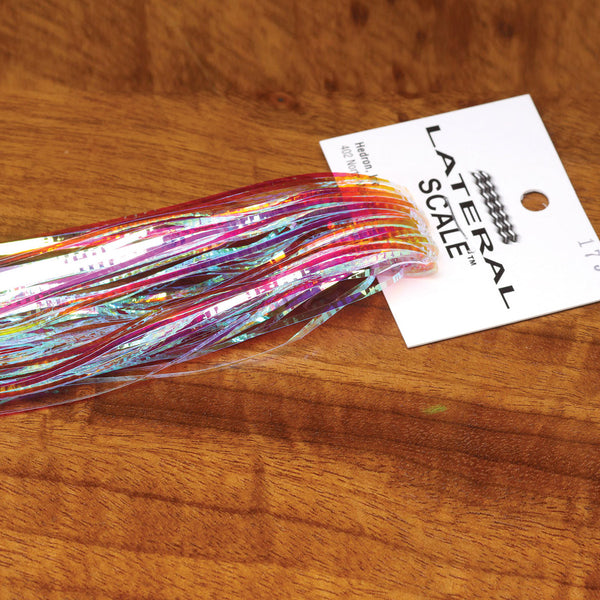 Lateral Scale by Hedron
Flashabou with embossed scale patterns.
"Lateral scale is a fly tying material that mimics the look of baitfish scales, featuring a horizontally crimped mylar or tinsel that creates a fluttering, reflective effect"
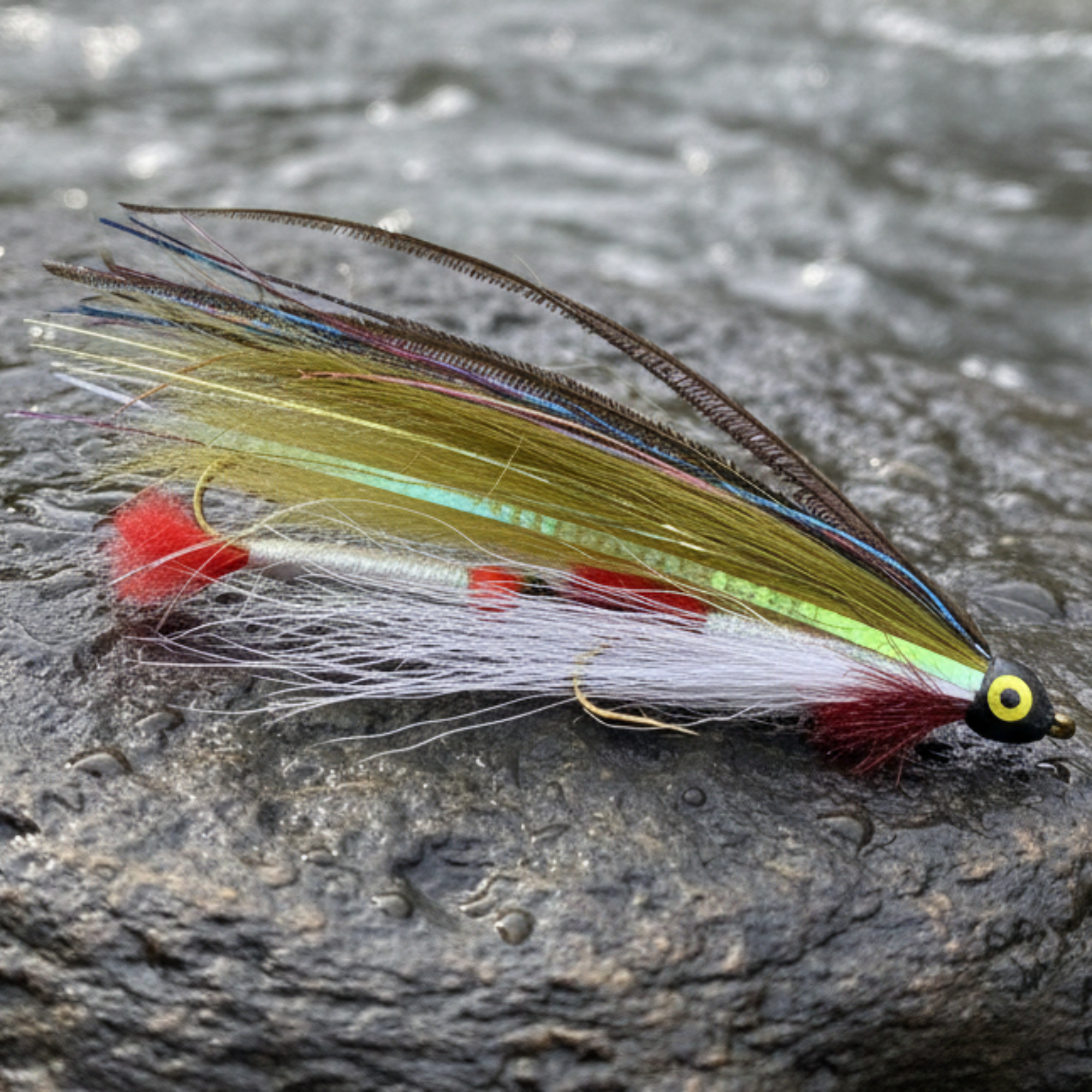 I use Lateral Scale in a number of my streamer patterns such as the
Olive & White Tandem shown to the left. It uses an opal color which accents the main colors effectively
Benefits
- Adds realistic texture to baitfish sides
- Incredibly durable
- High visibility helping fish key in
Drawbacks
- Wide and stiff—must be used sparingly
- Not suitable for very small flies
Best Uses
- Musky flies, big trout streamers, saltwater baitfish
9. Ripple Ice Fiber
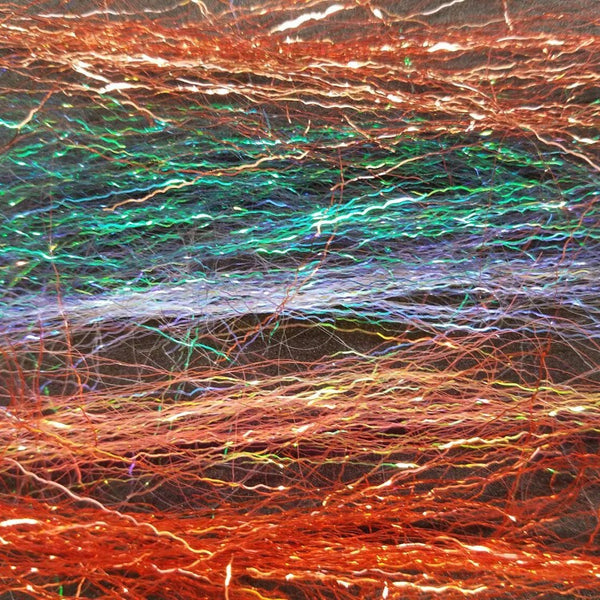
Ripple Ice Fiber by Hareline
"Ripple Ice Fiber is a synthetic fly tying material with a crinkled, stiff texture that adds flash and movement to flies. It is used for creating flashy wings, tails, and bulky bodies on streamers, nymphs, and other wet flies, and can be tied directly or used in a dubbing loop"
Chunky, crinkled flash that adds both volume and shine.
Benefits
- Great for creating heads or shoulders on streamers
- Perfect for composite brushes
- Very durable
Drawbacks
- Can create too much bulk on smaller patterns
- Not ideal for sparse, traditional salmon flies
Best Uses
- Streamer heads, masked baitfish profiles
10. UV Flash Materials
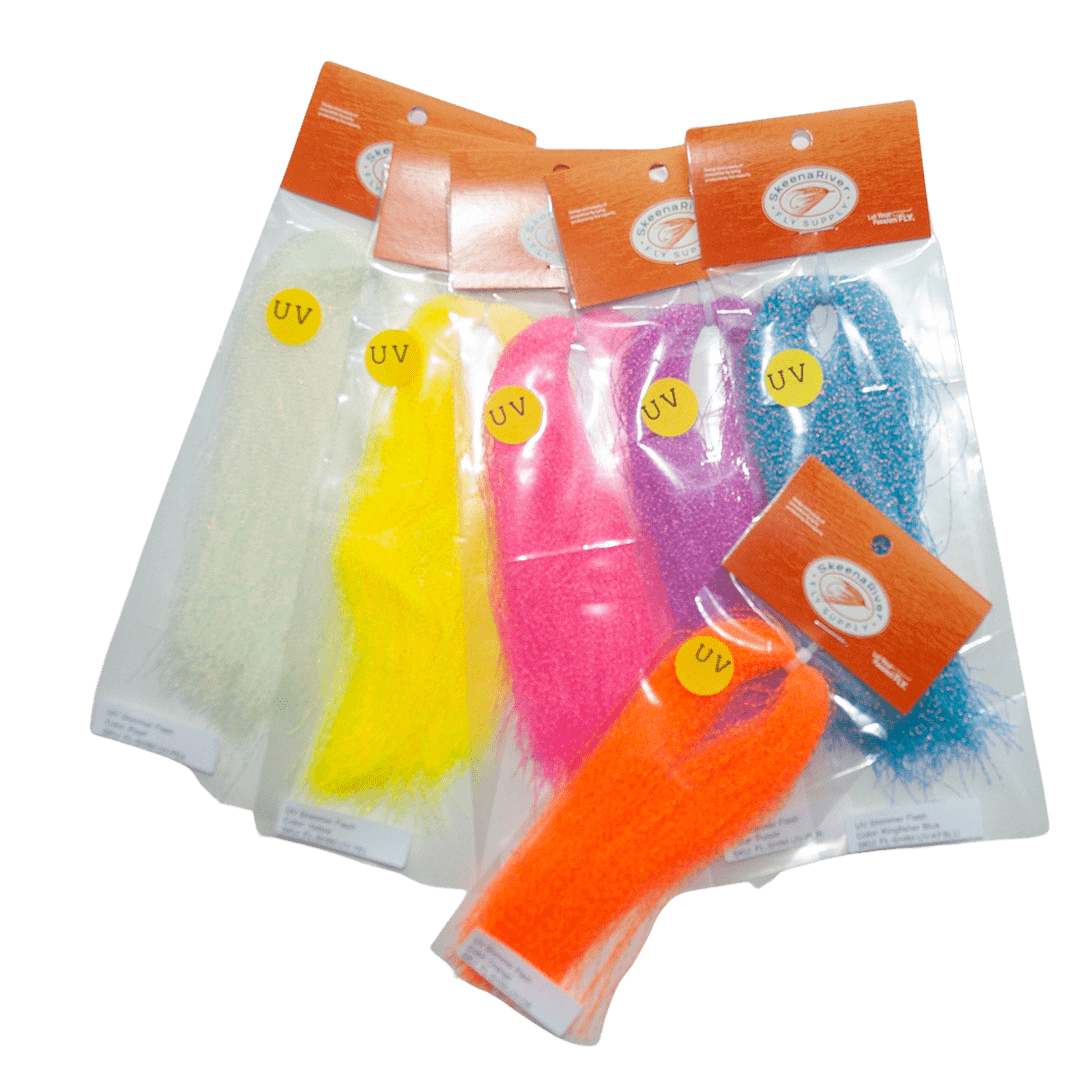
UV Shimmer Flash by Skeena River
UV reflects higher wavelengths that many predator fish detect strongly.
Many of the materials so far are available in a UV version which adds an added enhancement to the pattern especially in low light conditions or fishing deep.
Benefits
- Increased visibility in deep/low light
- Great for steelhead, salmon, and predatory trout
- Adds subtle “pop” rather than shine
Drawbacks
- Not always needed in bright, shallow water
- Expensive compared to standard flash
Best Uses
- Intruders, stonefly nymphs, night flies, deep streamers
Comparison Table of Flash Materials
|
Flash Material |
Characteristics |
Manufacturer / Brand |
|
Flashabou |
High shine, fluid movement |
Hedron |
|
Krystal Flash |
Twisted fibers, subtle sparkle |
Hareline, Hedron |
|
Krinkle Mirror Flash |
Crinkled reflective strands |
Hareline |
|
Ice Wing Fiber |
Frosted glow, high volume |
Hareline |
|
Holographic Flash |
3D shine, high visibility |
Various (Hareline, Hedron) |
|
Angel Hair |
Ultra fine, glowing blend |
Wapsi, Sybai |
|
Polar Flash |
Soft, natural shimmer |
Hedron |
|
Lateral Scale Flash |
Embossed scale pattern |
Hedron |
|
Ripple Ice Fiber |
Chunky, reflective, durable |
Hareline |
|
UV Flash |
UV-reactive wavelengths |
Various manufacturers |
How Much Flash Should You Use? (A Critical Insight for Thoughtful Tyers)
This is where craftsmanship really shows. The tendency in all of us is to apply the thinking that "more is better". This is the opposite in the fly tying world in my opinion. Many times a small amount is all that is needed. Think about what you are trying to imitate or mimic. Movement and profile is more important especially in baitfish patterns.
When to Use More Flash
- Dirty or tannic water
- Overcast days
- Fast runs where fish react instinctively
- Baitfish with high sheen (smelt, herring, sardines)
When to Use Less Flash
- Clear spring creeks
- Heavily pressured trout rivers
- Bright sun in shallow water
- Chinook and Atlantic salmon during low flows
A Good Rule of Thumb
“If you think you’ve added enough flash… remove a little.”
This principle resonates with anglers who appreciate subtlety and mastery.
Tips for Working With Flash Materials
✔ Blend Flash With Natural Fibers
Flash looks best when embedded within natural materials like bucktail, marabou, or fur.
✔ Use Flash as an Accent, Not a Centerpiece
A few strands in the tail or wing often outperform full-flash wings.
✔ Match Flash to Target Species
- Salmon & steelhead: pinks, purples, holographic
- Trophy trout: pearl, UV, subtle greens
- Saltwater: pearl, silver, chartreuse, blue
✔ Trim Flash Unevenly
Different fiber lengths create a more natural, lifelike profile.
✔ Avoid Symmetry
Fish don’t see perfection—they see motion.
Conclusion: Flash as a Tool for the Adventurous Fly Tyer
I haven't even touched on the Saltwater Fly Tying side which is a topic in itself lending to a host of other flash materials available to the tier. Many of these are incorporated into freshwater patterns as well.
Its safe to say that flash has earned a critical place in fly tying and there seems to be few patterns which call don't call for at least a small amount. As you see from above in baitfish imitations its essential for the patterns' effectiveness.
Whether tying for trout in the Rockies, steelhead in the Pacific Northwest, Atlantic salmon and Brook Trout in Labrador, or bonefish in Belize, these materials allow anglers to craft patterns that reflect skill, intention, and a passion for the craft.
Flash doesn’t just catch fish—it elevates the fly tying experience.
Shop now at www.dctackle.ca and discover materials that move, shimmer, and fish like the real deal.
💥 Join our Fly Fishing Adventurers’ mailing list for 10% off your first order and insider access to exclusive tying tips, tutorials, and early product releases.
👉 Visit the Shop → — Because the perfect fly starts with the perfect material.
.png)
Some of the links in this article are affiliate links, which means I may earn a small commission if you choose to make a purchase through them — at no additional cost to you. I only recommend products and tools that I personally use, trust, or believe add genuine value. These commissions help support the continued creation of free content on this site.


