
For the experienced fly tier—someone who values precision, durability, and elevated design—materials are never just materials. They’re tools that shape not only how a fly looks in the vise, but how it behaves in the water.
Few material comparisons are more important right now than:
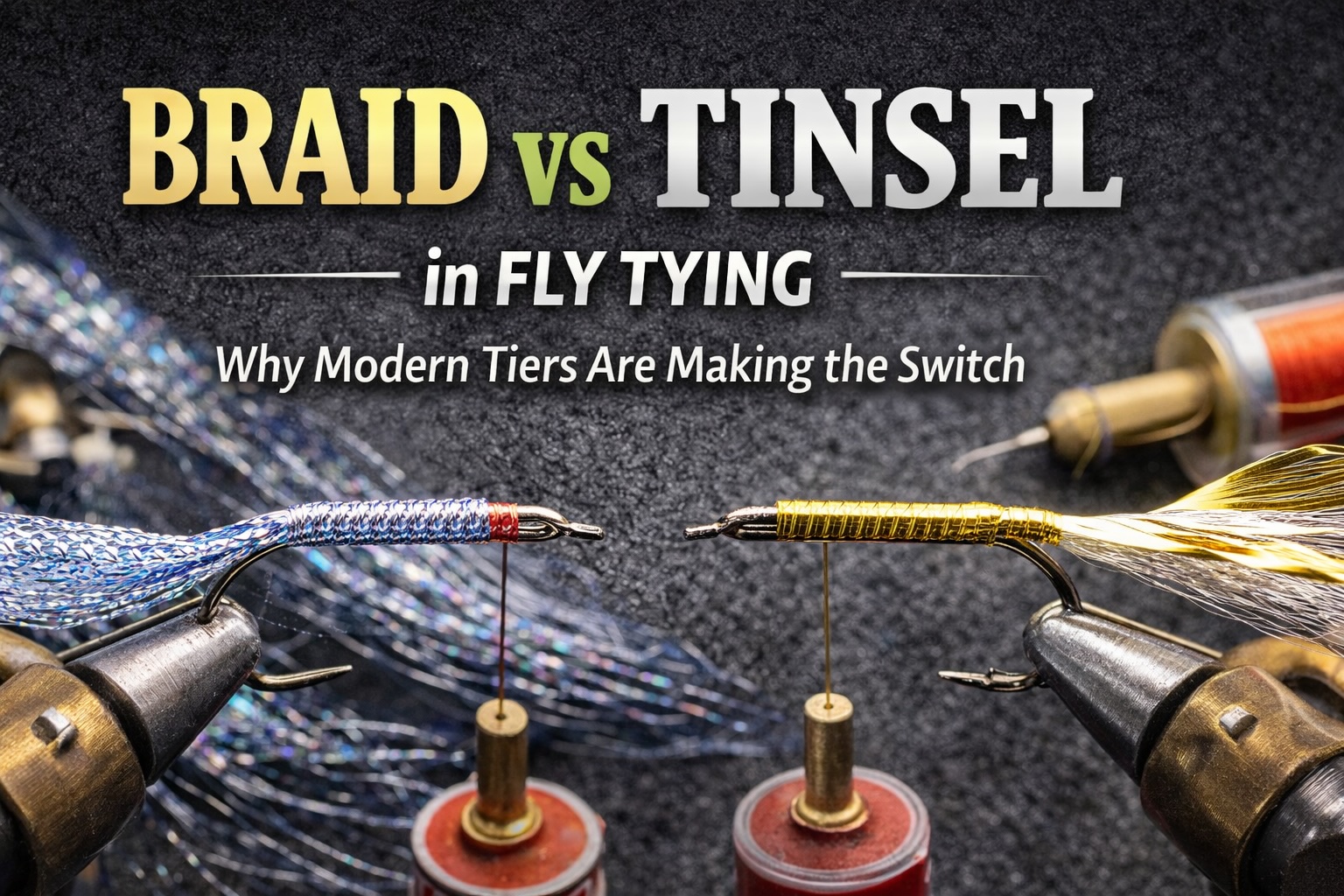
Braid vs. Tinsel
At first glance, they seem interchangeable. Both create flashy bodies, both are staples in streamer and salmon fly design, and both have decades of history.
But once you understand the true structural and functional differences, it becomes clear:
Braid isn’t just an alternative to tinsel—it’s a completely different design tool.
Braid vs. Tinsel: The Core Differences (Where It Really Matters)
Let’s break this down properly—because this is where advanced tiers separate themselves.
1. Structural Composition
Tinsel
- Flat or oval metallic strip
- Smooth, non-textured surface
- Usually foil or coated plastic
Braid
- Woven, multi-strand synthetic fibers
- Often tubular or flat woven mesh
- Built with internal structure and depth
👉 Why this matters:
Tinsel is one-dimensional
Braid is three-dimensional
2. Light Reflection vs Light Manipulation
Tinsel
- Reflects light off the surface only
- Produces a sharp, mirror-like flash
- Flash is directional and often harsh
Braid
- Allows light to enter and bounce within the weave
- Produces a diffused, multi-angle shimmer
- Flash is layered, softer, and more natural
👉 Think of it like this:
- Tinsel = a mirror
- Braid = a prism
In the Water
This difference becomes critical:
- Tinsel can “blink” unnaturally
- Braid produces a constant, lifelike pulse of light
👉 Especially important in:
- Baitfish imitations
- Clear water conditions
- Pressured fish scenarios
3. Profile & Body Control
Tinsel
- Wraps flat against the hook
- Can create ridges or uneven layering
- Difficult to taper cleanly
Braid
- Compressible and shapeable
- Can be:
- Flattened
- Stretched
- Layered
👉 Result:
- Cleaner tapers
- More consistent bodies
- Better control over profile thickness
4. Durability & Longevity
Tinsel
- Prone to:
- Cracking
- Splitting
- Abrasion damage
Braid
- Woven fibers distribute stress
- Far more resistant to:
- Teeth
- Rocks
- Repeated casting
👉 This is especially critical for:
- Streamers (pike, trout, bass)
- Salmon flies that are actually fished
5. Ease of Use at the Vise
Tinsel
- Can twist easily
- Requires careful tension control
- Often frays at tie-in points
Braid
- Forgiving material
- Easy to control with thread tension
- Less prone to twisting
👉 For production tying:
Braid is faster, cleaner, and more repeatable
6. Texture & Movement
Tinsel
- Smooth and rigid
- Adds visual flash only
Braid
- Slight texture
- Can “breathe” subtly in water
- Integrates with surrounding materials
👉 This matters when paired with:
- Nayat hair
- Cashmere goat
- Bucktail
7. Color Depth & Visual Complexity
Tinsel
- Surface-level color
- Often appears flat
Braid
- Multi-layered coloration
- Light interacts with internal fibers
- Produces:
- Richer tones
- Subtle shifts in hue
👉 Especially noticeable in:
- Pearl vs silver comparisons
- UV or holographic blends
3 Essential Braid Materials for the Modern Tier
Now that we’ve established the real differences between braid and tinsel, the next step is selecting the right braid for the job. For a tier operating at a high level—especially one focused on streamers and salmon flies—this becomes part of a repeatable, intentional system.
Below is a deeper breakdown of three essential braid materials, now centered around Bill’s Flat Bodi Braid, along with how each behaves, where it excels, and how to apply it effectively.
As you can imagine there are an array of braid choices for the fly tyer. These are three that I have used and found to be representative of many of the braid choices available thus can serve as a basis for comparison and analysis
Living in the USA and interested in purchasing DcTackle Flies? Check out my Etsy Shop at My Etsy Store
All applicable duties and fees reflected in pricing to make purchasing simple. New patterns added weekly
1. Bill’s Flat Bodi Braid – Controlled Flash with Structural Precision
What It Is
Bill’s Flat Bodi Braid is a flattened, woven braid designed to provide:
- Smooth body coverage
- Controlled flash
- Slight compressibility without bulk
Unlike the tubular version, this material is purpose-built for wrapping, making it far more aligned with traditional body construction—but with modern advantages.
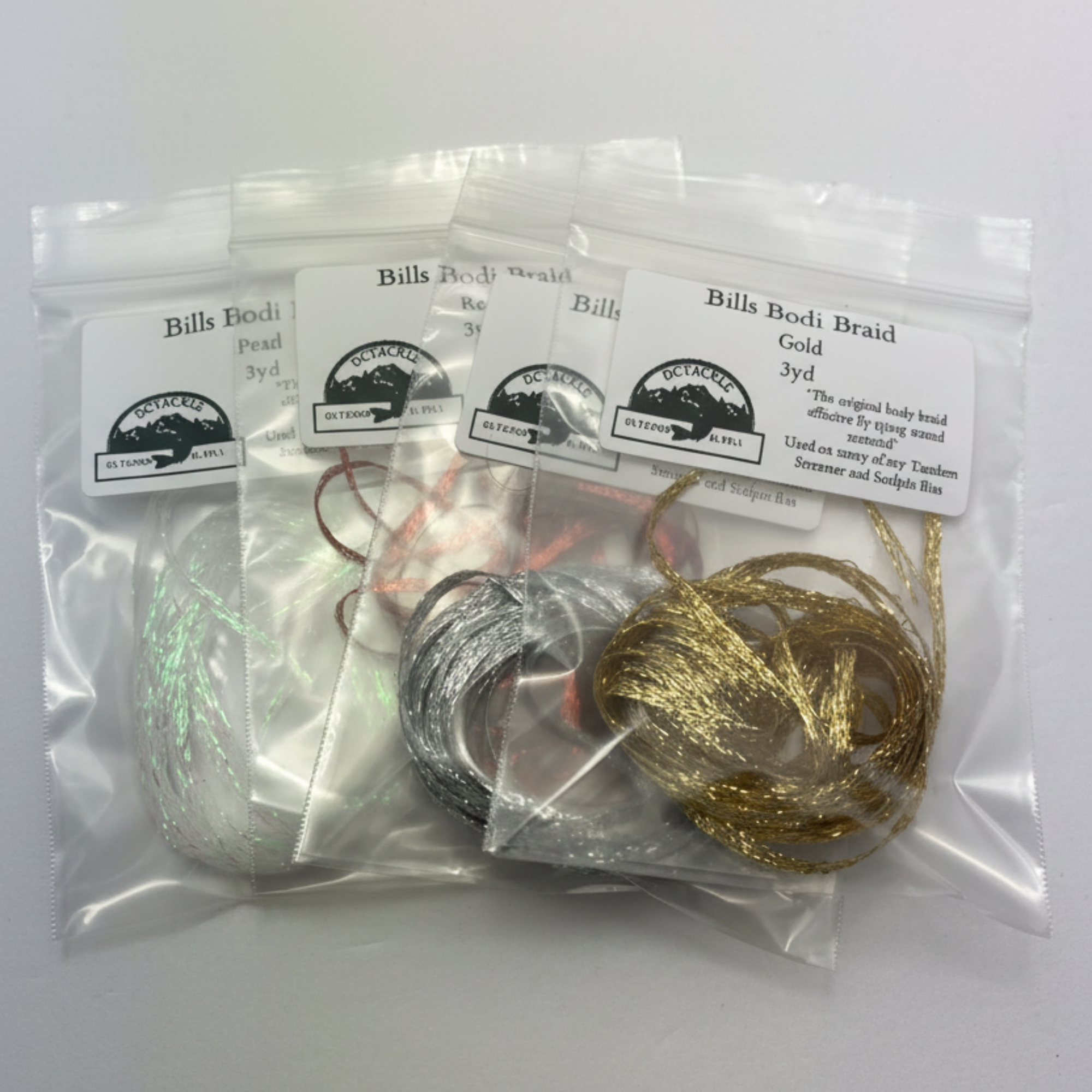 Bills Bodi Braid
I have been using Bills Bodi Braid for many years and it has been consistently my first choice for a wider braid option especially when building bodies for streamers and larger sculpin patterns. Its tough, takes a permanent marker well, can be stretched and twisted into a ribbing material if needed and frayed into strands as an accent flash if so desired.
Material Behavior
- Naturally lays flat on the hook shank
- Slightly compressible under thread tension
- Maintains a consistent width when wrapped properly
- Subtle woven texture creates internal light diffusion
👉 Think of it as:
A high-performance evolution of flat tinsel
Key Advantages
1. Clean, Tapered Bodies Without Bulk
Bill’s Flat Bodi Braid excels at:
- Creating smooth, even wraps
- Avoiding ridging common with tinsel
- Building natural tapers with minimal effort
👉 Especially valuable in:
- Slim baitfish streamers
- Modern salmon fly bodies
2. Controlled, Refined Flash
Unlike traditional tinsel:
- Flash is not harsh or mirror-like
- Instead, it’s softened and diffused through the weave
👉 Result:
- A more lifelike shimmer
- Better integration with natural materials like:
- Nayat
- Cashmere goat
- Bucktail
3. Excellent Layer Integration
Flat Bodi Braid works seamlessly with layered systems:
- Under lateral scale
- Beneath translucent wings
- Alongside flash materials
👉 It becomes part of the fly—not just a surface wrap
4. Durability Upgrade Over Tinsel
- Resistant to cracking and splitting
- Holds up under repeated casting and fish contact
👉 Ideal for:
- Fishing flies, not just display patterns
Best Use Cases
- Hairwing streamers (baitfish + attractor series)
- Atlantic salmon flies (modern interpretations)
- Steelhead patterns requiring durability + refinement
👉 Bottom Line:
Bill’s Flat Bodi Braid offers the perfect balance of control, durability, and refined flash—making it a cornerstone material for modern tying systems
2. Hareline Flat Diamond Braid – The Versatile Workhorse
What It Is
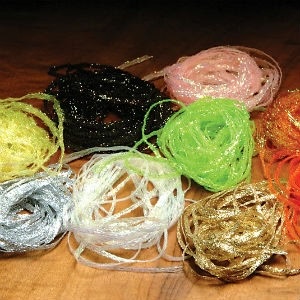
A flattened braid with slightly more texture and flash output than Bill’s Flat Bodi Braid.
It’s one of the most accessible and versatile braid materials available, offering:
- Ease of use
- Strong reflectivity
- Wide color availability
Material Behavior
- Slightly more textured than Bodi Braid
- Reflects more surface light
- Still lays flat and wraps cleanly
👉 Compared to Bill’s Flat Bodi Braid:
- More flash
- Slightly less refined finish
Key Advantages
1. Strong Visual Presence
This braid produces:
- Brighter flash
- More aggressive reflectivity
👉 Excellent for:
- Attractor streamers
- Low light or stained water conditions
2. Easy to Work With
- Forgiving under tension
- Minimal twisting
- Predictable wrap behavior
👉 Ideal for:
- Production tying
- Repeating consistent patterns
3. Wide Color Range
Available in:
- Natural tones
- Fluorescents
- Metallics
👉 Supports both:
- Match-the-hatch designs
- Trigger-based attractor systems
I use the Hareline Flat Diamond Braid option on a number of my tandem streamers as an alternative to Bills Bodi Braid especially where varied colors are required. The Black & White Shiner Tandem for example uses this Hareline braid exclusively. I find the texture particulalry in black is a little different and adds something to the character of the fly
Advanced Applications
- Use in contrast layering with darker wings
- Combine with:
- Flashabou lateral scale
- Grizzly hackle
- Bright throat accents
👉 Builds a high-visibility streamer system
Best Use Cases
- Attractor streamers
- Steelhead and salmon patterns
- High-contrast baitfish designs
👉 Bottom Line:
Hareline Flat Diamond Braid is your high-visibility, high-impact option—perfect when you want your fly to stand out
3. Lagartun Flat Braid – Precision and Premium Finish
What It Is
Lagartun Flat Braid represents the top tier of braid materials, known for:
- Exceptional consistency
- Refined finishes
- Superior manufacturing quality
Material Behavior
- Ultra-consistent width
- Smooth, even wraps
- Minimal fraying
👉 It behaves exactly the way you expect—every time
Key Advantages
1. Flawless Body Construction
Lagartun produces:
- Clean segmentation
- Even spacing
- Professional-grade finish
👉 Especially noticeable in:
- Salmon flies
- Display-quality streamers
2. Rich, High-End Color Profiles
Colors are:
- Deep
- Saturated
- True under varying light
👉 Ideal for:
- Classic salmon fly tones
- Subtle, refined baitfish patterns
3. Precision Control
Because of its consistency:
- You can tie repeatable, identical flies
- Maintain symmetry across batches
👉 Critical for:
- Premium product lines
- High-end commercial tying
Best Use Cases
- Atlantic salmon flies
- Spey / Dee style patterns
- Premium streamer collections
👉 Bottom Line:
Lagartun Flat Braid is about precision, refinement, and consistency—the material of choice when finish quality matters most
Final Insight for the Advanced Tier
These materials aren’t interchangeable—they’re tools with specific purposes.
- Use Bodi Braid when you want control and refinement
- Use Diamond Braid when you want visibility and aggression
- Use Lagartun when you want perfection
There are numerous other braid material available to the fly tyer which I haven't mentioned in this article. Braids from Semperfli, Textreme offer excellent choices for example. Wapsi has a nice braid called Sparkle Braid as well which is a flatter version of Hareline's traditional diamon braid.
They all have their uses and unique properties which serve to give the creative fly tyer a wealth of options. Try some of these and see what you think!
Streamer Design: Where Braid Really Shines
For modern streamer systems—like the structured approach you’re building—braid becomes a foundational material.
Why It Works
When paired with:
- Mylar tubing
- Krinkle flash
- Nayat wings
- Lateral lines
👉 Braid acts as a bridge layer:
- Connecting structure to light
- Enhancing depth without overpowering
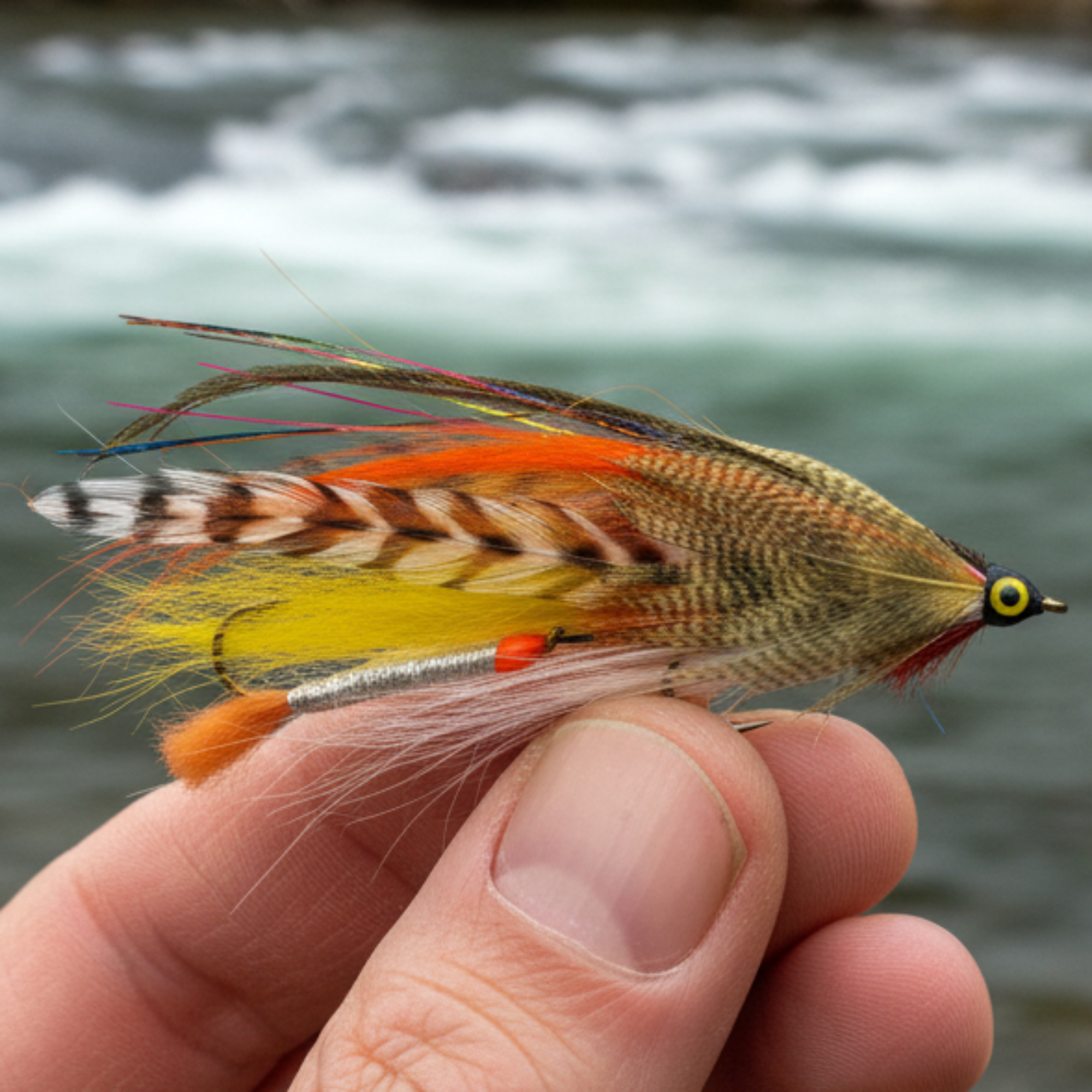 Pink Lady Tandem - Uses Bills Bodi braid for the body material on both front and rear hook
Practical Advantages
- More durable baitfish bodies
- Cleaner transitions between materials
- Better light diffusion under the wing
Advanced Tip
Use braid when you want:
- Controlled flash
- Defined body shape
- A more refined, premium finish
Salmon Fly Design: Tradition Meets Function
In classic salmon flies, tinsel still holds a place—but braid is increasingly being adopted by tiers who actually fish their flies.
Where Braid Excels
- Smooth, seamless bodies
- Enhanced color richness
- Improved durability over time
Where Tinsel Still Works
- Traditional ribbing
- Classic patterns where authenticity matters
👉 But for modern applications:
Braid offers a cleaner, more functional evolution of traditional body materials
When to Choose Each Material
Choose Braid When:
- Building streamers or baitfish
- You want durability
- You need body control and taper
- You’re creating modern or attractor patterns
Choose Tinsel When:
- Tying traditional salmon flies
- Adding ribbing
- You want a minimalist, classic look
Living in the USA and interested in purchasing DcTackle Flies? Check out my Etsy Shop at My Etsy Store
All applicable duties and fees reflected in pricing to make purchasing simple. New patterns added weekly
Final Takeaway
The real shift here isn’t just material—it’s mindset.
Whether you choose any of the previous material choices or others from the vast array of options available I encourage you to check it out the next time you are reaching for a flat tinsel
Get new fly recipes, fishing reports, and exclusive offers delivered right to your inbox
.png)


