
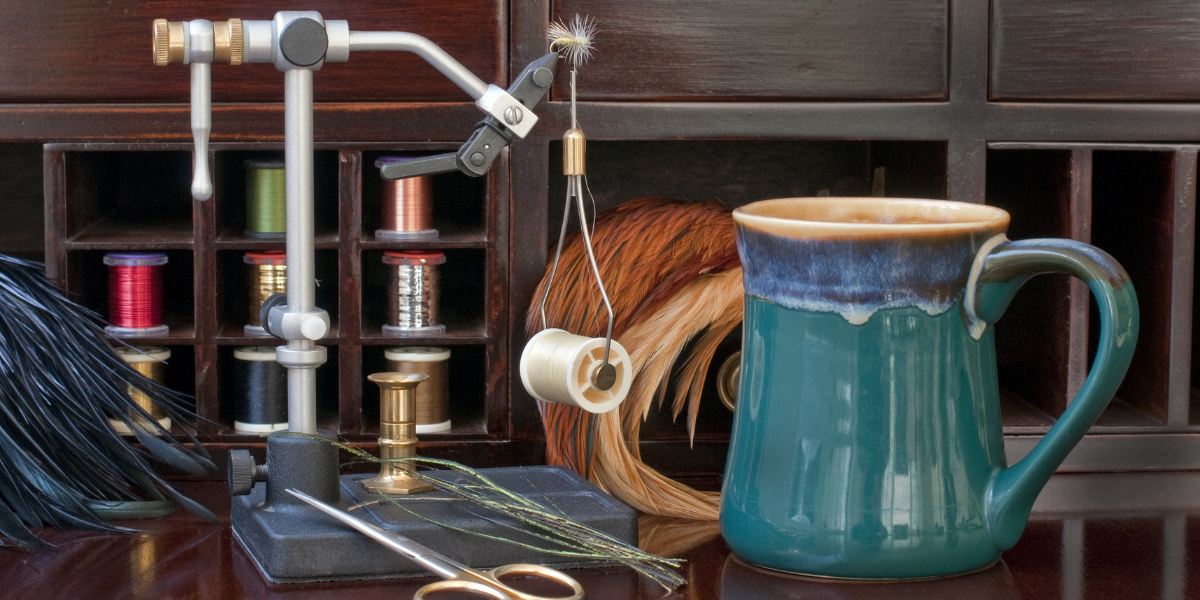
In the world of fly tying, few milestones transform a tyer’s skill more dramatically than learning the principles of production fly tying. Whether you tie commercially, fill your own boxes for salmon season, or simply want cleaner proportions and greater repeatability across your favourite patterns, adopting a production mindset can elevate your tying faster than almost anything else.
Inspired by the timeless teachings of A.K. Best—the godfather of efficient fly tying—this guide explores the systems, habits, and methods that help tyers produce consistent, high-quality flies at scale. Most importantly, it explains how these techniques benefit any fly tyer, from novice to seasoned salmon addict.
If your goal is to tie better flies in less time—and actually enjoy the process—this is your roadmap.
What Is Production Fly Tying?
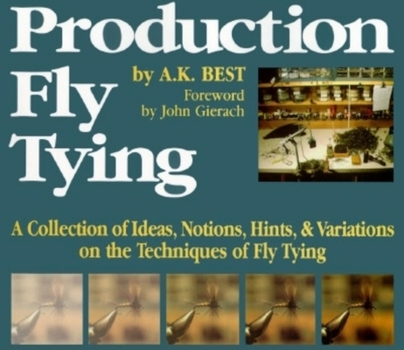
The Book that started my "Production Fly Tying" journey
Production fly tying is the practice of tying flies using a systematic, efficient workflow that minimizes wasted movement, maximizes consistency, and produces repeatable, professional-quality flies.
It’s not just for commercial tyers. Production tying is beneficial for:
- Salmon anglers who burn through Bombers, Bugs, and wet flies every season
- Trout anglers who want uniform dry flies that float the same
- Tyers who want stronger, cleaner patterns
- Anyone who wants to get more tying done in less time
- Wants every fly to be the same as the next. Consistent quality
A.K. Best famously said that production tying is simply “tying the best fly you can… every single time.”
Why Production Fly Tying Makes You a Better Tyer
Before diving into methods, it’s important to understand why this approach works.
Production tying helps you:
✔ Achieve Perfect Consistency
Your flies will look and perform the same across an entire batch.
No more “one beauty and nine cousins.”
✔ Develop Muscle Memory
Repetition builds skill faster than any tutorial.
✔ Reduce Waste
Better material prep means you get more flies per feather, skin, or pack.
✔ Tie Faster Without Rushing
Efficiency replaces speed.
Speed becomes natural.
✔ Create Cleaner, More Proportionate Flies
Repeating a pattern builds visual accuracy.
✔ Build Personal Confidence
Fishing with a fly you tied that you know is perfect is incredibly rewarding.
Core Principles of Production Fly Tying (A.K. Best Method)
Below are the foundational elements of production tying and how to apply them to your own workflow—no matter your skill level.
1. Prepare All Materials Before Tying
(The most important principle)
Most tyers spend more time preparing materials than actually tying the fly. A.K. Best emphasized that the key to productivity is preparing once, tying many.
Examples of effective preparation:
- Pre-cut bucktail wings to exact lengths
- Strip hackle stems for correct tie-in thickness
- Pre-select matched quill wings
- Cut wire, Mylar, or ribbing to fly-specific lengths. (I recut all my streamer antron material underbodies to avoid multiple searching and handling of material)
- Pre select the perfect hackles for those larger bombers matching barb length to hook size. Sort them by hook size and store for easy access
When all materials are ready and organized, every fly you tie is smoother and cleaner.
2. Tie Flies in Stages—Not One Fly at a Time

Some of my patterns at various stages
This is the heart of production tying and something I have practiced for as long as I can remember.
This is especially suite to more complex patterns where multiple materials are needed or particularly if stages of gluing are required
A good example is my tandem streamers. I prepare all the bodies in stages as the bodies are created with the use of superglues/Zap which requires time to dry effectively
Many times multiple bodies cover a number of patterns which I purposely designed this way to be more efficient. This is not always the case of coarse.
Instead of tying one fly at a time from start to finish, you tie:
- All tails for the batch
- All bodies
- All wings
- All hackle
- All heads
Why it works:
- Eliminates constant tool switching
- Improves consistency (muscle memory repeats the same motion)
- Imparts a rhythmic, meditative flow
- Reduces errors
- Dramatically increases speed
Example workflow (for a batch of Atlantic Salmon Bombers):
- Prep hooks
- Tie in all tails
- Form all bodies
- Tie in all wings
- Add hackle to each
- Whip finish everything
By the 10th fly, you’re often tying twice as efficiently as the first.
3. Build an Organized, Purpose-Driven Tying Bench
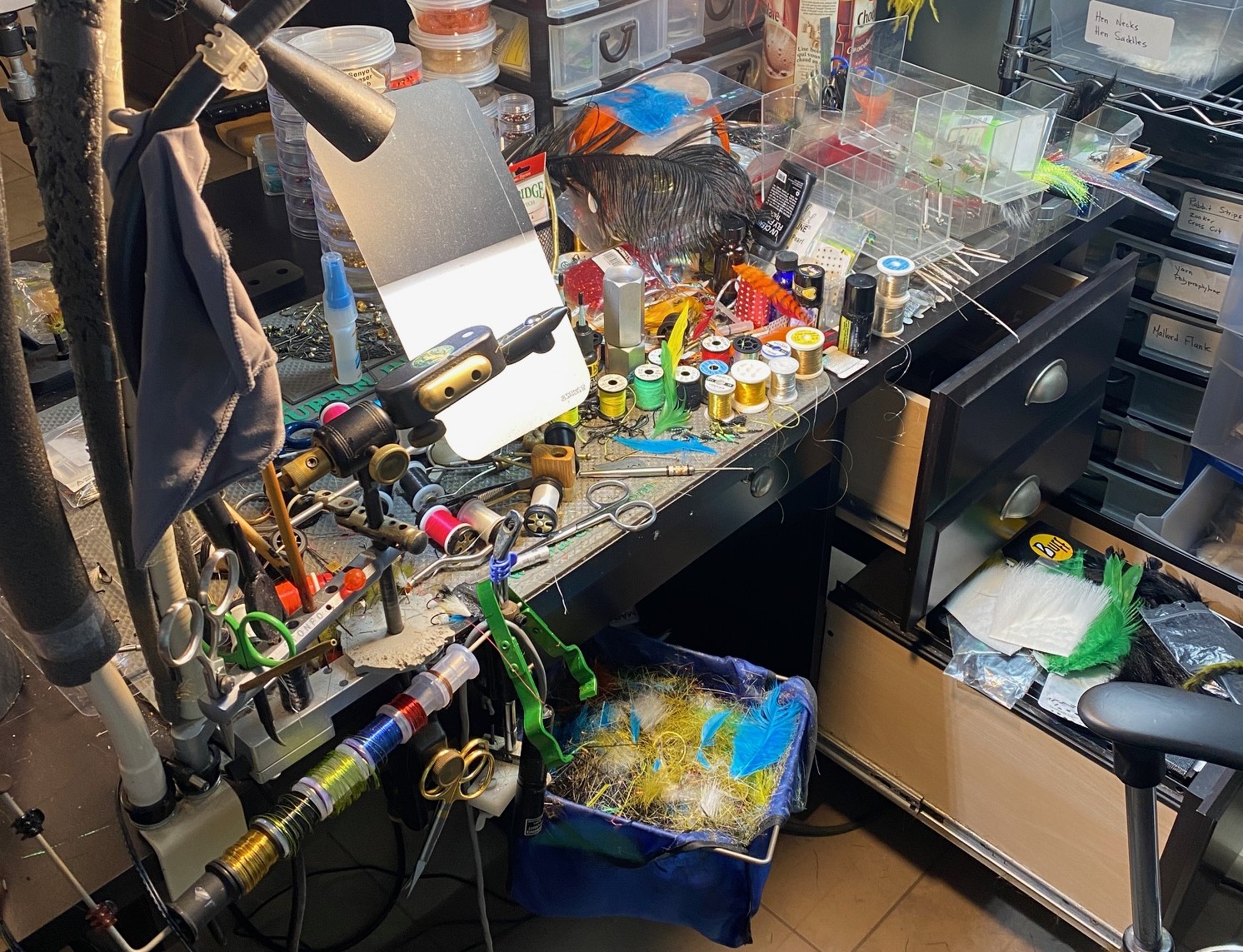
This is "NOT" an example of good organization
A well-organized tying space is not fancy—it’s functional.
(Not something I have been successful adhering to)!!
Best bench principles:
- No clutter
- Everything has a designated home
- Tools stored where hands naturally fall
- Hooks stored in easy organized containers by size. Rounded bottom slots and large enough for easy hook pickup/selection
- Beads stored in trays by size and color. (Visit your local Michaels Craft Store - they have lots of assorted containers that work perfectly)
- Materials within arm’s reach
- If using multiple bobbins have a way to sort them and not allow them to lie around your bench getting in the way, hard to find and god forbid resulting in the thread coming free of the bobbin. Lol. When I find a good bobbin storage accessory I'll let you know
- Good lighting from two angles, You can never have enough light in my opinion especially as you get older - Trust me! P.S. I am searching for another lighting option now - A future blog post no doubt!
- Only the materials for today’s batch stay on the desk. This is a great tip if you can stick to it. Harder said than down if you happen to be tying flies commercially and multiple patterns are requested especially in smaller quantities.
Disorganization destroys consistency. This is true for any hobby! Learned but not also a lesson that sticks! A clean bench builds discipline, flow, and creativity.
4. Repeat Patterns to Build Consistency
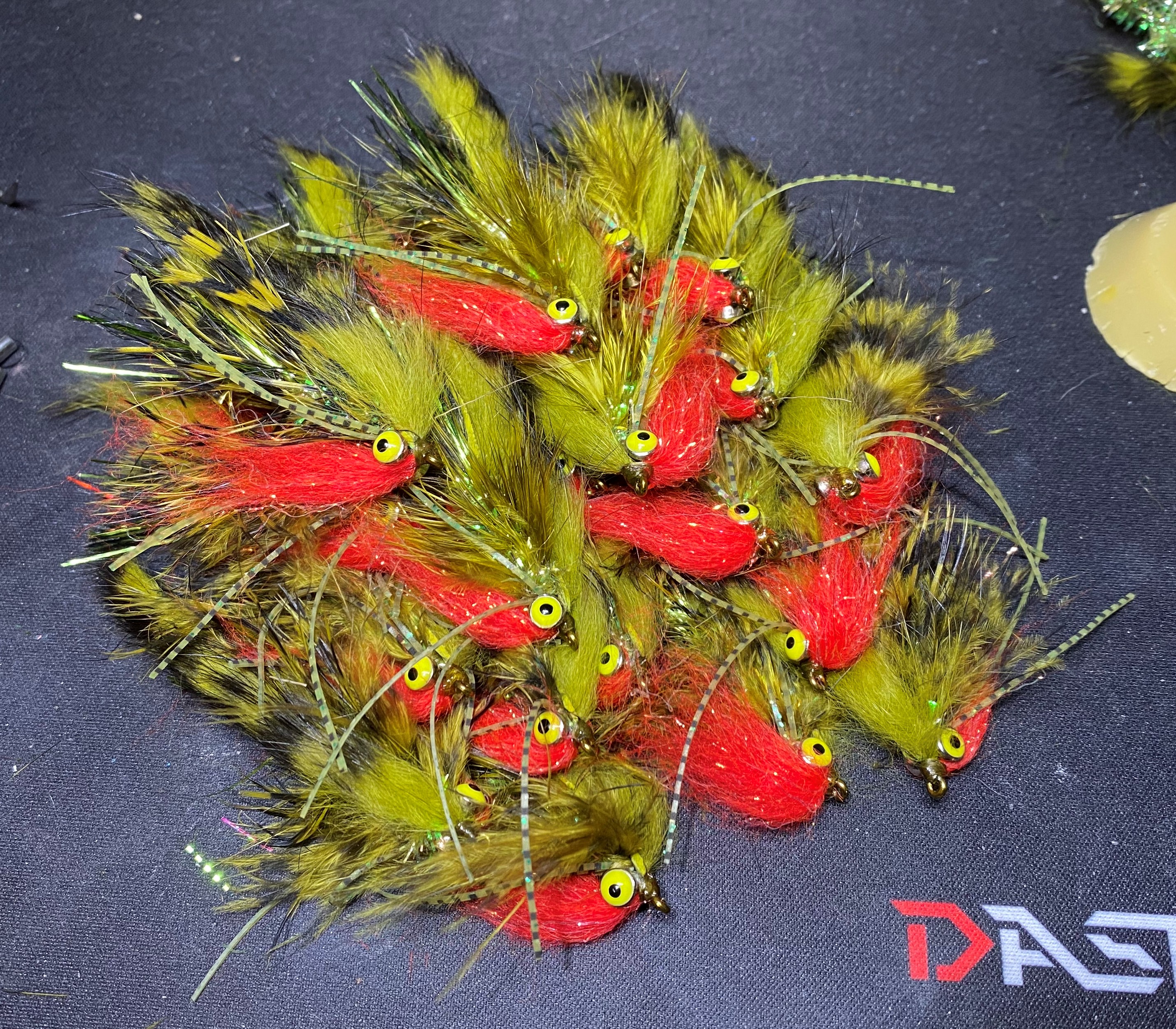
Some Sculpins - Each one a copy of the last
Tying a single Blue Charm teaches you almost nothing.
It is said (and I agree) that you need to tie 12 of a pattern before you can begin to become consistent. Depends of coarse on your experience but in general I think it stands true.
What repetition builds:
- Proportion awareness
- Thread control
- Muscle memory
- Understanding of materials
- Speed and confidence
Many tyers try to tie “one of everything.” Production-minded tyers tie “twelve of one thing.”
That’s how you get good.
This is true. I rarely tie 1 and switch to a new pattern unless its for a specific order that I need to fill quickly.
Although I might tie multiple flies at a sitting I try to stick with no more than 3-4 patterns and tie at least 6 of each or more. This cuts down on the amount of material I have on the bench. There are many I know who tie dozens of the same pattern and size at a sitting. I applaud you for your diligence and ability to stay focused. I personally have not been able to stay focused for longer than an hour at a time. But that’s just me!
5. Learn Efficient Hand Movements
Great tyers move with economy.
A.K. Best noted three rules:
- Every motion must have purpose
- No wasted hand movement
- Put the tool down only when you’re finished with it
This includes:
- Keeping scissors in-hand (never down on the bench)
- Using your bobbin hand for material control
- Keeping materials within a foot of your vise
- Rolling deer hair into place rather than repositioning repeatedly
Tiny improvements compound dramatically over a dozen flies.
6. Use the Right Tools—But Keep Them Minimal
Production tying relies on quality, not quantity.
Tools that make the biggest difference:
- Razor-sharp scissors
- Fine and coarse bobbins
- Good-quality whip finisher
- Hair stacker (two sizes)
- Bodkin
- Threader
Most everything else is optional.
Simplicity wins.
7. Develop Thread Control (The True Secret to Clean Flies)
"This is probably the most important concept to master in my opinion"
Learn to Use Minimal, Efficient Wraps — Master the “Purposeful Wrap” Mindset
One of the most defining habits of a true production tyer is the ability to use only the wraps that matter. Every turn of thread either strengthens the fly—or wastes time and creates bulk. Most fly tyers use 2–3× more wraps than necessary, especially when securing materials or finishing a head. Refining this one skill dramatically improves both speed and quality.
Why Fewer Wraps Matter
Purpose-driven wraps create three major benefits:
A) Cleaner, Sharper Fly Heads
Excess thread builds bulky, lumpy heads that:
- ruin the fly’s silhouette
- reduce hydrodynamics
- make finishing knots harder
- look inconsistent
Minimal wraps create tight, compact heads that look professional and perform better in the water.
B) Stronger, More Durable Flies
It sounds backwards—but it’s true:
➡️ Too many wraps make a fly weaker.
Extra thread causes materials to shift, stack unevenly, or flare unpredictably.
With just enough wraps:
- the thread bites deeper
- materials stay locked
- the overall structure is tighter
Your flies survive more hits from fish and rocks, and fewer unravel during use.
I have found this to be especially true when building large streamer heads. Too many loose wraps and the head thread shifts, slumps, and loosens. It is critical to keep the threads "purposeful", deliberate with just amount of tension almost to the point of breakage.
Its critical in these cases to have threads you can trust not to break and when using small diameter options. With the variety of quality threads available today this is easier to practice than ever. P.S. I have settled on Semperfli's threads for the majority of my tying but there are many brands that will foot the bill!
Don't choose the cheap thread option thinking "a thread is a thread is a thread" . You will quickly learn a vocabulary of words that shouldn't be said in church! If you get my drift!
How to Use Minimal Wraps Effectively
Here are practical techniques to master the skill:
✔Use Thread Torque
Let the natural twist and pressure of the thread pull materials into position.
Most locks only need 2–4 controlled wraps.
✔ Trust Your First Wrap
The biggest mistake tyers make is "insurance wraps."
If you place the first wrap with tension and intention, you won’t need them.
✔ Flatten or Twist Your Thread as Needed
- Flattened thread spreads pressure and prevents cutting.
- Twisted (cord) thread bites deeper and locks tighter.
This lets you use fewer wraps without sacrificing hold.
✔ Train to Know “How Much is Enough”
Practice by tying:
- tails with only 2 wraps
- wings with 3 wraps
- dubbing noodles with a single capture wrap
You’ll quickly learn that materials hold better than you expect.
✔ Keep Materials Sparse
Proper proportioning reduces bulk, allowing thread to secure materials efficiently with fewer turns.
✔ Audit Your Wrap Count
While tying a practice fly:
- Tie the fly as you normally would
- Undo the fly, counting wraps as you unwind
- Tie again with the goal of reducing wraps by 30–40%
Most tyers are shocked by how many wraps they’re using.
Read these last few points again. I have used this count system for years especially on salmon flies. It builds a rhythm and consistency to your tying and you use only the amount of thread you need.
Remember back when you started? Like me your first mistakes beyond proportion was likely ending with too many thread wraps and a head that looked like football! Just saying! We all experienced it but its solved easily with a little practice and attention to "thread control"
C) Faster, More Rhythmic Tying
Production tying is all about rhythm—smooth, predictable movements repeated with precision.
Fewer wraps mean:
- fewer “cycles” of the bobbin
- less bobbin repositioning
- faster transitions between steps
When tying 6, 12, or 24 of the same pattern, this saves minutes per fly and hours per batch.
8. Practice “Selective Perfection”
Production tying isn’t about rushing. It’s about consistency.
Per A.K. Best:
“Every fly must be your best effort, but not every fly must be perfect.”
Perfection is the enemy of finishing the batch.
Consistency is the goal.
9. Evaluate and Improve (The Post-Batch Review)
After finishing a dozen:
- Line them up
- Compare proportions
- Check heads
- Inspect thread wraps
- Compare to a reference fly
- Identify what improved and what didn’t
This reflective practice dramatically increases growth.

How Production Tying Helps the Novice or Intermediate Tyer
✔ Builds confidence fast
✔ Reduces frustration
✔ Teaches proportion and thread tension
✔ Increases enjoyment
✔ Creates cleaner flies that fish better
✔ Develops professional-level habits early
Many tyers only begin improving when they shift into a production mindset.
Conclusion: Production Fly Tying Is the Fastest Path to Mastery
Production tying is not about speed.
It’s about craft, consistency, and mastery.
By preparing materials, organizing your workspace, tying in stages, and repeating patterns, you’ll accomplish what many tyers never achieve:
- Flies that fish better
- Patterns that look consistent
- Faster tying with less frustration
- Deep understanding of materials
- A more enjoyable, efficient tying experience
Whether you tie Atlantic Salmon classics, trout dries, or streamer patterns, adopting a pro
duction mindset will elevate every fly you make.
If you want to tie cleaner, tighter, and more confidently—this is the path.
If you are a tier yourself you no doubt realized I could have discussed many more aspects of tying that produces consistent, quality results in an efficient time all bundled under the theme of "Production Fly Tying"
Those mentioned above are just some of what I believe to be the most critical but I emphasize that this is somewhat dependent on your own tying style and patterns you create. Everyone has tying habits they have created over years which work for them. That is what makes this hobby challenging yet a fun creative outlet.
Use you own creative juices and enjoy the process!
✨ Shop now at www.dctackle.ca and discover materials that move, shimmer, and fish like the real deal.
💥 Join our Fly Fishing Adventurers’ mailing list for 10% off your first order and insider access to exclusive tying tips, tutorials, and early product releases.
👉 Visit the Shop → — Because the perfect fly starts with the perfect material.
.png)
Some of the links in this article are affiliate links, which means I may earn a small commission if you choose to make a purchase through them — at no additional cost to you. I only recommend products and tools that I personally use, trust, or believe add genuine value. These commissions help support the continued creation of free content on this site.


