

Few topics in fly fishing spark as much appreciation—and quiet debate—as the evolution of the classic featherwing streamer into its modern counterpart: the hairwing conversion. For the experienced angler and fly tyer, this isn’t about replacing tradition—it’s about adapting proven designs to fish more effectively in modern conditions.
In this two-part series, we’ll explore a curated selection of classic streamer patterns alongside their hairwing adaptations. But before diving into specific flies, it’s essential to understand why these conversions exist—and why they’ve become a staple in the boxes of serious anglers.
This first article lays the foundation: the benefits of hairwing streamers, material choices, and when they may outperform traditional featherwing designs.
The Origins of Classic Featherwing Streamers
Classic streamers—particularly those from the Rangeley Lakes region of Maine—were designed to imitate smelt and other slender baitfish.
Patterns tied with saddle hackle wings, married feathers, and jungle cock cheeks were not only effective but visually striking.
These flies were built for:
- Cold, clear water
- Landlocked salmon and brook trout
- A time when materials like long saddle hackles were more accessible and consistent
They remain incredibly effective today—but they also come with limitations that modern fly tyers have worked to overcome.
My first jump into the world of streamer fly tying started many years ago with feather wings. I tied many of the classics taking care to choose just the right hackle feathers that would give me the perfect profile. This wasn't always easy given the availability of quality capes suitable for streamer tying. Choices a little more expanded today but certainly at a premium cost
Although I was happy with the results both from the quality of tie as well as their effectiveness I always found them to more fragile and at times certainly a chore to tie in larger quantities. (I admire the pioneers like Carrie Stevens who first created many of these Rangeley style streamers)
I was looking for a more durable alternative and with the increased availability of many varied hair choices perfect for streamer construction came my answer.
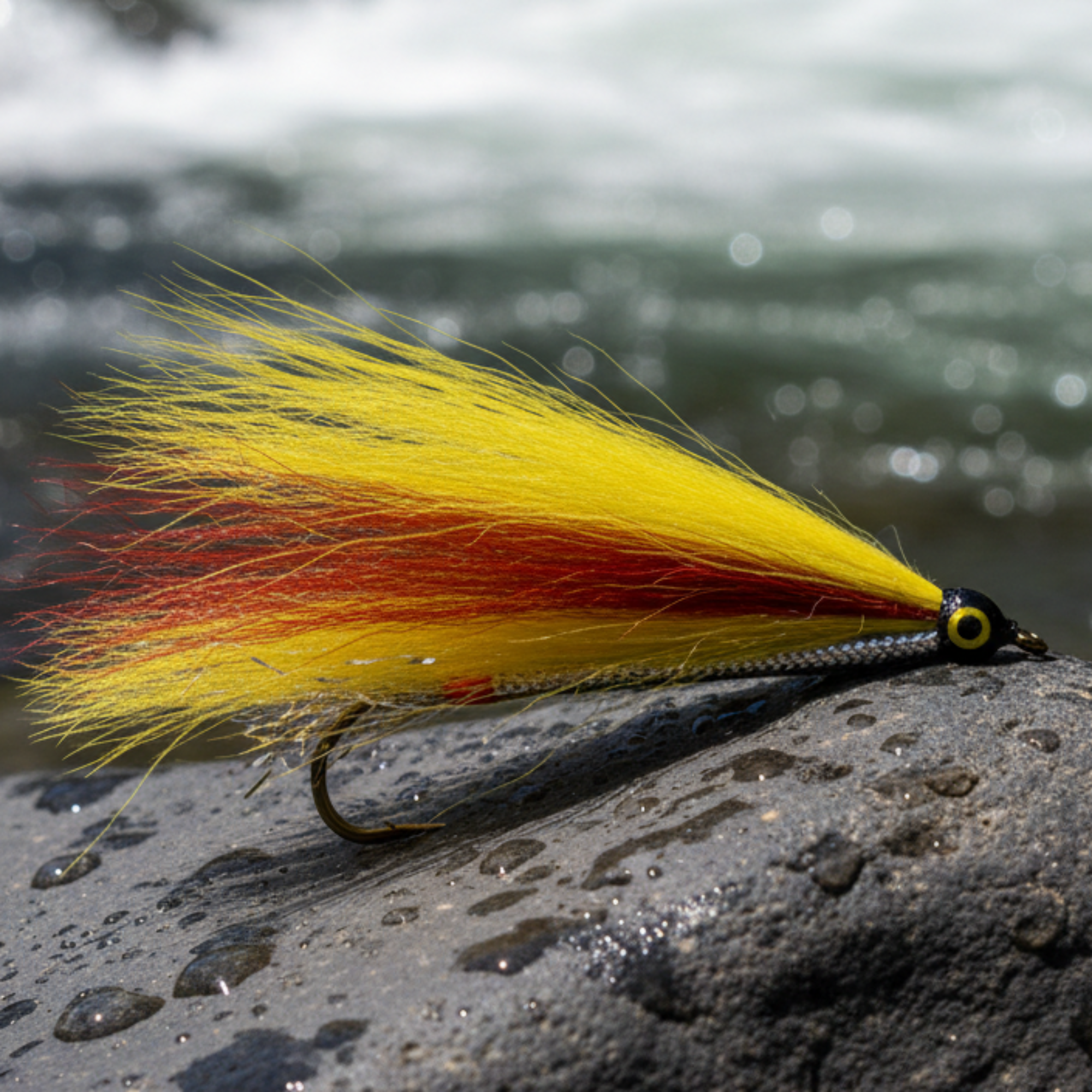 The Classic Mickey Finn Hairwing
Why Hairwing Conversions Exist
Hairwing streamers are not a reinvention—they’re an evolution.
By replacing feather wings with natural hair (bucktail, squirrel, fox, etc.), tyers created patterns that:
- Are more durable
- Maintain a consistent profile in moving water
- Are easier to tie with repeatable results
- Perform better in a wider range of conditions
For the fly fishing adventurer, this matters. Whether you’re fishing a remote salmon river or casting streamers for aggressive trout, reliability and performance often outweigh aesthetics alone.
Also important to make note of the issue of availability and quality of feather wing materials namely appropriate hackle for feather wing construction as well as supply and relative pricing which has like many materials increased significantly over the past few years. Quality feather wing construction requires specific hackles which are not always readily available.
Living in the USA and interested in purchasing DcTackle Flies? Check out my Etsy Shop at My Etsy Store
All applicable duties and fees reflected in pricing to make purchasing simple. New patterns added weekly
Key Benefits of Hairwing Streamers
1. Durability That Holds Up to Real Fishing
One of the most immediate advantages of hairwing streamers is their longevity.
Featherwing flies:
- Can foul or collapse after repeated casting
- Are more prone to damage from teeth or current
Hairwing flies:
- Retain structure even after multiple fish
- Resist tearing and maintain their fishable profile longer
For anglers covering water or targeting aggressive fish, this translates to more time fishing and less time replacing flies.
2. Superior Profile Control in Moving Water
Hair behaves differently than feathers underwater.
- Bucktail and similar fibers create a tapered, flowing silhouette
- They don’t collapse as easily in current
- Maintain a consistent baitfish shape
This is especially important when:
- Swinging flies in rivers
- Fishing through heavy current seams
- Targeting fish that key in on profile over detail
Hairwing streamers offer a more predictable presentation, which often leads to more confident strikes.
3. Ease of Tying & Consistency
Classic featherwing streamers can be:
- Technically demanding
- Dependent on high-quality matched feathers
- Difficult to reproduce consistently
Hairwing conversions simplify the process:
- Materials are more widely available
- Techniques are more forgiving
- Results are easier to replicate across multiple flies
For the experienced tyer, this means:
- Faster tying sessions
- More consistent batches
- Greater flexibility in experimentation
4. Versatility Across Conditions
Hairwing streamers adapt well to different environments:
- Clear water → sparse, natural tones
- Stained water → brighter colors and added flash
- Fast currents → structured wings that hold shape
- Stillwater → subtle movement and profile
This versatility allows a single pattern to be modified and fished across multiple fisheries and species.
Material Options for Hairwing Conversions (Modern & Traditional)
One of the greatest advantages of hairwing streamer design is the ability to blend traditional natural materials with modern innovations. Today’s fly tyer has access to an incredible range of fibers that allow for precise control over movement, profile, translucency, and durability.
For the serious fly tyer, material selection isn’t just about availability—it’s about intentional design. Each material brings a unique behavior in the water, and understanding those differences is what separates a good fly from a great one.
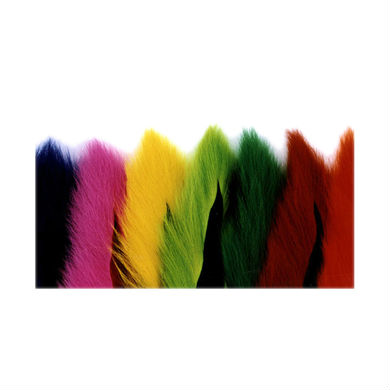 Bucktail
Bucktail – The Foundation Material
Bucktail remains the cornerstone of most hairwing streamer patterns.
Advantages:
- Naturally tapered fibers for clean, controlled profiles
- Holds shape well in current
- Easy to stack, layer, and blend
- Widely available in a broad range of colors
Best Uses:
- Classic streamer conversions
- Baitfish profiles with defined structure
- Situations where profile stability is critical
💡 Bucktail is often used as a base layer, even when incorporating more modern materials.
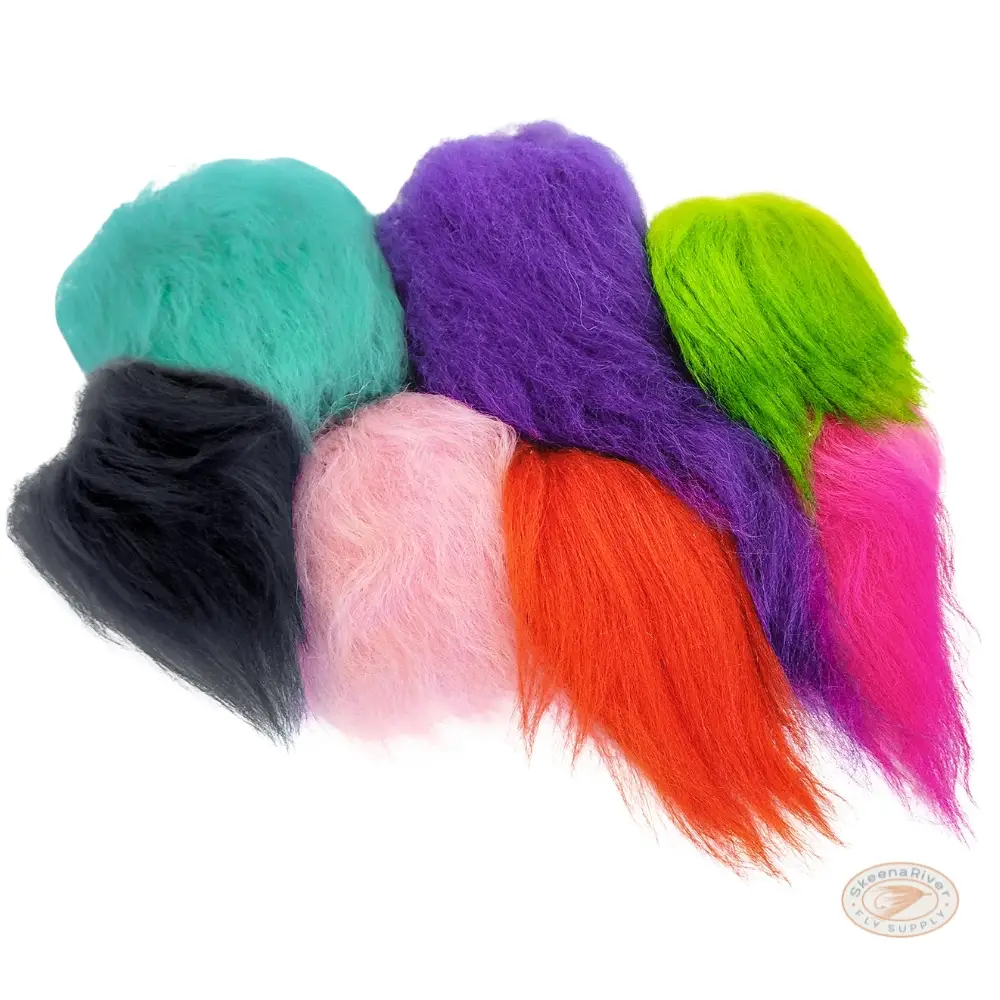 Nayat Hair (Snow Runner)
Nayat Hair – Maximum Movement & Flow
Nayat hair has quickly become a favorite among modern streamer tyers.
It has become my hair of choice for streamer construction both in terms of quality of material and ease of use. The longer lengths also allow for tying a broad range of larger profile streamers whether targeting landlocked salomn and brook trout to pike and musky. It covers all the bases!
Advantages:
- Exceptionally long, flowing fibers
- Creates lifelike, undulating movement
- Maintains motion even at slow retrieve speeds
- Adds a sense of natural bulk without weight
Best Uses:
- Large streamers and articulated patterns
- Cold water conditions where subtle movement matters
- When you want a fluid, breathing profile
💡 Ideal for creating modern baitfish imitations that feel alive in the water.
Cashmere Goat – Softness & Natural Taper
Cashmere goat hair offers a refined, premium alternative to traditional materials.
When combined with other materials especially as a top layer cashmere goat and other similar goat options like arctic goat and himalayan goat all add an element to streamer construction that is both functional and asthetic. It has earned a dedicated place in my streamer material arsenal.
Advantages:
- Extremely soft, fine fibers
- Natural taper with excellent flow
- Slight translucency for realistic appearance
- Blends easily with both natural and synthetic fibers
Best Uses:
- Streamer wings requiring subtle, lifelike motion
- Layering to create depth and dimension
- Patterns targeting selective or pressured fish
💡 A great option when you want a more natural, less rigid presentation than bucktail alone.
Squirrel Tail – Subtle Movement & Natural Texture
A classic material that still holds its place in modern tying.
Not as common is larger streamer patterns but certainly can be suitable for shorter casting streamers especially if choosing a Fox Squirrel alternative which typically has a much longer hair profile
Advantages:
- Fine, soft fibers with natural barring
- Provides understated, realistic movement
- Slightly stiffer than ultra-soft materials like Nayat
Best Uses:
- Smaller streamers
- Clear water and low-flow conditions
- Adding texture and realism to mixed wings
Fox Hair – Length & Fluid Motion
Fox hair bridges the gap between structure and movement.
Advantages:
- Longer fibers than bucktail
- Smooth, flowing action
- Natural translucency
Best Uses:
- Medium to large streamers
- Situations where movement is prioritized over rigidity
- Blending with stiffer materials for balance
Modern Synthetic Hair Options
Synthetic materials have evolved significantly and now play a major role in modern hairwing streamer design.
EP Fibers & Similar Synthetic Blends
Advantages:
- Consistent fiber length and texture
- Highly durable
- Naturally translucent
- Easy to blend and taper
Best Uses:
- Modern baitfish patterns
- Layered streamer builds
- Saltwater and freshwater applications
Craft Fur & Pseudo Hair Materials
Advantages:
- Soft, mobile fibers
- Affordable and versatile
- Excellent for creating bulk without weight
Best Uses:
- Streamer bodies and wings
- Filling out profiles behind natural hair
Flash Blends (Krinkle Flash, Mirror Flash, etc.)
While not primary wing materials, flash fibers are essential accents.
Krinkle Flash has become my go to flash material for many of my streamer patterns giving just the right amount of flash with the least amount of fibers providing fish attraction qualities without being overpowering. Combined with other flash like flashabou or holographic flashabou and you have an unbeatable combination!
Advantages:
- Adds light reflection and visibility
- Mimics baitfish scale flash
- Enhances attraction in low light or stained water
Best Uses:
- Mixed into wings (sparingly)
- Lateral line accents
- Trigger points within the pattern
Blending Materials for Maximum Effect
The most effective modern hairwing streamers rarely rely on a single material.
Instead, experienced tyers layer and blend:
- Bucktail (structure) + Nayat (movement)
- Cashmere goat (softness) + flash (visibility)
- Squirrel (texture) + synthetics (durability)
This approach allows you to control:
- Profile
- Movement
- Sink rate
- Visual triggers
💡 The goal is not complexity—it’s intentional design that matches how baitfish behave in the water.
Natural vs. Synthetic: Finding the Balance
For the modern fly tyer, the choice isn’t one or the other—it’s about using the right material for the job.
Natural Materials Provide:
- Organic movement
- Subtle realism
- Traditional aesthetics
Synthetic Materials Provide:
- Durability
- Consistency
- Enhanced visibility
The most effective hairwing streamers often combine both, creating flies that are visually convincing, structurally sound, and highly fishable
Hairwing vs. Featherwing: When to Choose Each
This isn’t about one being “better”—it’s about choosing the right tool for the situation.
Choose Featherwing Streamers When:
- Fishing calm or slow-moving water
- Targeting fish that respond to subtle, lifelike movement
- You want a traditional presentation
- Conditions allow for a more delicate fly
Choose Hairwing Streamers When:
- Fishing rivers with current
- Covering large amounts of water
- Targeting aggressive or opportunistic fish
- Durability and consistency matter
Design Philosophy: Suggestion Over Imitation
One of the key principles behind both classic and hairwing streamers is that they are suggestive, not exact imitations.
They work because they represent:
- Movement
- Profile
- Contrast
- Trigger points (like red throats or flash)
Hairwing conversions maintain this philosophy while improving the functional aspects of the fly.
Living in the USA and interested in purchasing DcTackle Flies? Check out my Etsy Shop at My Etsy Store
All applicable duties and fees reflected in pricing to make purchasing simple. New patterns added weekly
Adapting Classic Patterns into Hairwing Form
When converting a featherwing streamer into a hairwing version, consider:
1. Maintain Proportions
- Keep the same length and silhouette
- Respect the original pattern’s intent
2. Simplify Where Needed
- Replace complex feather structures with layered hair wings
- Focus on clean, fishable design
3. Retain Key Trigger Elements
- Throat colors
- Body materials
- Contrast zones
4. Adjust Density
- Too much hair = bulky, lifeless fly
- Too little = lack of presence
Finding the balance is where experience comes into play.
I try to keep the spirit of the featherwing original in terms of wing and body color, choosing materials that provide the correct silhouette and color combination especially when wet. With some trial and error you end up with a streamer you enjoy tying, is pleasing to the fisherman, looks great in the flybox and the fish love it too!
Why Hairwing Conversions Belong in Every Serious Fly Box
For the modern angler, hairwing streamers offer a compelling combination of:
- Tradition-inspired design
- Modern durability
- Consistent performance
They allow you to:
- Fish classic patterns with confidence
- Adapt to changing conditions
- Tie efficiently without sacrificing quality
Most importantly, they catch fish—consistently.
Final Thoughts - Looking Ahead: Pattern-by-Pattern Comparisons
The evolution from featherwing to hairwing streamers reflects something deeper than just material choice—it reflects the mindset of the angler.
A willingness to:
- Respect tradition
- Embrace innovation
- Prioritize performance
In the Part 2 of this series, we’ll take a deeper dive into specific classic streamer patterns and their hairwing equivalents.
Each comparison will explore:
- Original featherwing design
- Hairwing adaptation
- Key material substitutions
- When and where each version excels
This will give you a practical framework for deciding what to tie, what to fish, and how to adapt your approach on the water.
I will provide 6 of my top conversions to start. This should give you a sense of my thinking when approaching the adaptations.
From there we can explore other options in future articles to create new designs based on available baitfish species from coast to coast. From here the opportunity is endless for creating new and varied patterns in a number of formats from single hook, tandem rigs, to articulated 2 hook rigs and articulated shank options. We will explore them all in coming articles.
Hopefully it will give you the inspiration to create your own designs and allow your creative juices to flow!
It adds an element to your fly fishing journey that is both creative, educational and inspirational!
Get new fly recipes, fishing reports, and exclusive offers delivered right to your inbox
.png)


