
After years at the vise, most fly tyers come to the same realization:
Thread control—not materials, not patterns, not tools—is what ultimately defines the quality of a fly.
You can tie a fly with modest materials and still produce something clean, durable, and effective if your thread work is disciplined. On the other hand, the finest hooks, feathers, and hair in the world won’t save a fly built with poor tension, sloppy wraps, or uncontrolled pressure.
Professional fly tyers don’t necessarily tie harder than everyone else—they tie with intention. Thread control is how that intention is expressed.
This article is not about how to start fly tying. It’s about how experienced tyers refine their work so flies become cleaner, stronger, more repeatable, and more durable, pattern after pattern.
Why Thread Control Is the Foundation of Professional Fly Tying
Thread is the only material that touches every part of a fly.
It anchors materials.
It defines shape.
It builds heads.
It creates segmentation.
It determines durability.
And yet, thread is often treated as an afterthought.
Professional tyers understand that thread is not just a fastening tool—it is a construction medium. Mastery of thread control allows you to:
- Build precise, consistent tapers
- Secure materials without damage
- Eliminate unnecessary bulk
- Prevent slippage and rotation
- Finish flies cleanly and confidently
Thread control is not about strength alone. It’s about graduated pressure, placement, and awareness.
My take has always been to "be deliberate" in your thread wrapping both with tension and placement. Watch some of the great tiers like Davie McPhail and you will see what I mean. He has a consistency and purpose built into every wrap of thread, applying pressure where needed and backing off thread wraps when required to reduce bulk. "Each wrap in the flies construction creates the foundation necessary to lead to the perfect head completion"
Understanding Tension: Not Too Much, Not Too Little
One of the biggest misconceptions in fly tying is that stronger thread means tighter wraps. In reality, tighter wraps often create more problems than they solve.
Professional tyers think in terms of zones of tension rather than a single pressure level.
Three Practical Tension Zones
- Positioning Tension
Light pressure used to place materials exactly where you want them before locking them down. - Locking Tension
Increased pressure applied once materials are aligned, securing them without cutting or deforming fibers. - Structural Tension
Firm, deliberate pressure used when building heads, securing eyes, spinning hair, or forming durable foundations.
The ability to transition smoothly between these zones—sometimes within a single wrap—is what separates refined thread work from brute force tying.
I think these 3 points of tension control is key to any tiers ability to tie consistent high quality flies. The pattern recipe is not important. Sure there are techniques to learn especially if dealing with intricate hair work or tying classic patterns but overall applying the practical tension principals no matter the pattern will result in a fly you will always be proud of.
Living in the USA and interested in purchasing DcTackle Flies? Check out my Etsy Shop at My Etsy Store
All applicable duties and fees reflected in pricing to make purchasing simple. New patterns added weekly
Trusting Your Thread (And Why Consistency Matters)
Every experienced tyer has broken thread at the worst possible moment—usually during wing tie-in or head finishing. That moment often leads to an overcorrection: tying too loosely to avoid breakage.
This is where many flies begin to fail.
Professional tyers commit to specific thread brands and sizes so they understand exactly how much pressure is available before failure. That trust allows them to:
- Apply confident tension at critical moments
- Avoid unnecessary wraps
- Maintain consistent results across dozens of flies
Switching thread constantly may seem harmless, but it disrupts muscle memory. Mastery comes from familiarity.
We as tyers have all ran into this issue whether we realized it or not. Too little tension (especially after a break when you become apprehensive about repeating the breakage) is the worse possible practice. It is guaranteed to produce an inferior fly. Many times you see this on inadequately secured wings or ribbing where the fly easily comes apart after minimal usage.
Much like "too much" tension where you cut through the material you are trying to secure or apply so much pressure over few wraps you literally contribute to material slippage. I have experienced this a lot in wing construction particularly when using "slick' materials. Consistent pressure wraps and maybe dropping to a smaller thread where you can apply more wraps without building bulk can be an effective alternative. (as long as your thread can handle the tension!)
It critical to "trust your thread" and how much tension can be applied. This can only be learned in my opinion by sticking to a brand you trust and becoming familiar with its properties and how much tension you can apply.
I personally have settled on Semperfli for the majority of my thread needs. Check out the growing lineup of Semperfli Threads at DcTackle
Flat vs Round Thread: Control Is Contextual
Thread control isn’t just about pressure—it’s also about thread shape.
Flat Thread
- Spreads under tension
- Covers more surface area
- Builds smooth bodies with fewer wraps
- Reduces cutting of delicate materials
Round Thread
- Bites into materials
- Offers more grip
- Excels at securing slippery or coarse fibers
- Better for stacking hair or locking synthetics
Professional tyers deliberately spin or flatten thread depending on the task at hand. This is not an aesthetic choice—it’s a structural one.
Knowing when to let thread lay flat and when to cord it tightly is a subtle but powerful skill.
As an example I prefer to use a "Nylon Thread" for securing nylon coated tandem wire in my tandem streamers. Its been around for years for is the best alternative I have found. Its strong and with its round profile bites into the nylon coating providing a secure connection and when combined with a coat of super glue results in a "bullet proof" connection necessary for these larger predatory flies.
In contrast I use a flatter thread like UTC140 or Semperfli 6/0 to finish off many of my larger streamer heads. Alternatively for salmon flies I use a flatter thread like Semperfli 12/0 or 8/0 to finish the heads depending on the hook sizing.
P.S. 12/0 Semperfli has become my standard thread of

choice for the majority of my salmon flies in sizes 8-12
Thread Placement: Precision Over Pressure
Many tying issues blamed on tension are actually placement problems.
Poor placement leads to:
- Materials rolling
- Bulky heads
- Inconsistent proportions
- Weak tie-in points
Professional tyers focus on where thread is applied just as much as how hard it’s pulled.
A well-placed wrap under moderate tension often outperforms multiple hard wraps stacked carelessly.
The mantra is simple:
The right wrap, in the right place, with the right pressure
Building Clean Bodies Through Controlled Layering
Thread is often the hidden culprit behind uneven bodies and sloppy tapers.
Professional tyers:
- Use minimal thread wraps between materials
- Build bodies progressively, not all at once
- Adjust tension as diameter increases
- Avoid compressing earlier layers unnecessarily
Thread is treated like sculpting clay—added intentionally, never incidentally.
This is especially important when tying:
- Classic salmon flies
- Streamers with layered materials
- Patterns with slim, elongated profiles
Hair, Synthetics, and the Cutting Problem
Strong modern threads have transformed fly tying—but they’ve also created new challenges.
Threads like GSP or high-strength polyester will cut hair and feathers instantly if tension is mismanaged.
Professional tyers compensate by:
- Using positioning wraps before tightening
- Flattening thread when working with hair
- Locking materials with angle rather than brute force
- Switching thread sizes strategically within a pattern
Strong thread is a tool—not a license to pull harder.
Thread Control in Streamer Construction
Streamers expose poor thread work faster than almost any other fly style.
Problems show up as:
- Spinning eyes
- Twisting wings
- Collapsing heads
- Short fly lifespan
Professional streamer construction relies on:
- Gradual tension increases
- Reinforced tie-in points
- Thread dams placed deliberately, not aggressively
- Clean transitions between material layers
Head Building: Where Discipline Shows
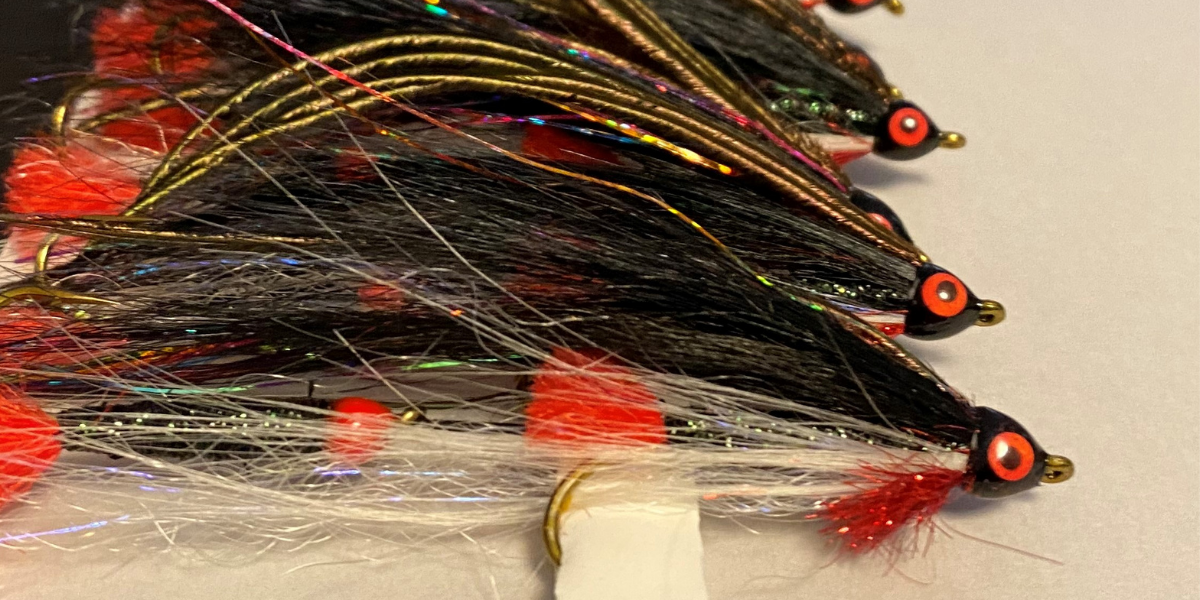
The fly’s head is the most honest indicator of a tyer’s thread control.
Clean heads are not small by accident—they are planned.
Professional tyers:
- Stop thread frequently to assess shape
- Use fewer wraps with higher intent
- Adjust tension based on material density
-
Finish with confidence, not panic
A rushed head is usually the result of poor planning earlier in the fly.
I think head construction is the first glimpse into whether the tyer has demonstrated a good understanding of thread control. Poorly constructed or crowded heads is quite common for new tyers and understandably so. It takes time and practice to create that perfect head or at least an acceptable and stable profile that he or she can be proud of.
Living in the USA and interested in purchasing DcTackle Flies? Check out my Etsy Shop at My Etsy Store
All applicable duties and fees reflected in pricing to make purchasing simple. New patterns added weekly
Consistency: The Professional Standard
The true test of thread control isn’t one perfect fly—it’s twenty identical ones.
Professional tyers aim for:
- Repeatable tension
- Consistent wrap counts
- Uniform proportions
- Identical head sizes
Thread control becomes a system, not a feeling.
This level of consistency is essential whether tying:
- For personal fly boxes
- For clients
- For retail or commercial production
Thread Control Is a Mental Discipline
More than anything, thread control is a mindset.
It requires:
- Slowing down when needed
- Knowing when not to pull harder
- Understanding material behavior
- Accepting that less thread often produces stronger flies
Professional tyers are not in a hurry at the vise. They are deliberate, calm, and observant.
Final Thoughts: Cleaner Flies Are Built, Not Forced
Thread control mastery doesn’t come from tying faster or buying stronger thread. It comes from awareness, repetition, and restraint.
Every clean, durable fly is the result of hundreds of small decisions—each one expressed through the thread.
When you learn to control thread with confidence and intention, everything else improves:
- Proportions
- Durability
- Appearance
- Performance
In the end, thread control isn’t just a technique—it’s the quiet signature of a professional fly tyer.
And hey — if you looking for a any of the flies or materials mentioned in this article check out DcTackle.ca — we can set you up with with all of your fly tying needs
Get new fly recipes, fishing reports, and exclusive offers delivered right to your inbox
.png)
Some of the links in this article are affiliate links, which means I may earn a small commission if you choose to make a purchase through them — at no additional cost to you. I only recommend products and tools that I personally use, trust, or believe add genuine value. These commissions help support the continued creation of free content on this site.


