

Few experiences in fly fishing compare to the violent strike of a large trout or steelhead crushing a streamer fly. Streamer fishing is visual, aggressive, and addictive — and behind every successful streamer pattern lies one critical component that many fly tyers overlook: the hook.
The right streamer hook affects:
- fly movement
- sink rate
- balance
- hooking percentages
- durability
- swimming action
- casting performance
Whether you’re tying modern articulated streamers, sleek hairwing baitfish patterns, or traditional bucktail streamers, choosing the correct hook can dramatically improve your success both at the vise and on the water.
This article lays out some of the basic considerations when choosing streamer hooks and provides references to some Brands and Models that are worth considering
Why Streamer Hooks Matter
Streamer hooks are far more than simple hardware.
They form the structural foundation of every fly you tie.
A poorly chosen hook can:
- ruin fly balance
- reduce hooking efficiency
- negatively affect movement
- create awkward swimming action
- compromise durability
A properly selected hook improves:
✅ natural baitfish profile
✅ hook penetration
✅ fly balance
✅ fish-holding power
✅ confidence on the water
For serious fly fishing adventurers and professional fly tyers alike, choosing premium streamer hooks is one of the most important decisions made at the vise.
Long Shank Streamer Hooks
Long shank hooks remain one of the most versatile choices for streamer tying.
These hooks provide:
✅ extended tying space
✅ elegant baitfish proportions
✅ improved feather alignment
✅ cleaner hairwing profiles
They are especially effective for:
- bucktail streamers
- featherwing streamers
- classic trout streamers
- modern hairwing baitfish patterns
Partridge CS15 Long Shank Streamer Hook
The Partridge CS15 Long Shank Streamer Hook is a classic streamer hook that blends traditional proportions with modern hook performance, making it an excellent choice for tying elegant featherwing and hairwing streamer patterns. Its extended shank provides ample tying space for building long tapered bodies and balanced baitfish silhouettes while maintaining the refined profile serious streamer tyers look for in both traditional and contemporary designs.
What I appreciate most about the CS15 is its versatility. The hook performs exceptionally well for classic single-hook streamers, and modern salmon or trout streamers where clean proportions and natural movement are critical. The long shank allows materials such as bucktail, fox, goat hair, schlappen, marabou, and flash blends to flow naturally without crowding the hook, resulting in flies that swim with a lifelike pulsing motion in the water.
The hook’s sharp point and strong wire construction also provide excellent hooking confidence while still preserving the elegant appearance many traditional streamer patterns are known for. Its slightly refined profile gives it a timeless streamer aesthetic that works beautifully for both classic featherwing streamers and modern articulated-inspired designs.
Professional Fly Tyer Insight
Many experienced streamer tyers intentionally select slightly longer shank hooks when tying hairwing streamers because they help maintain slim baitfish proportions while preventing material crowding near the hook eye.
Straight-Eye Streamer Hooks
Straight-eye hooks have become increasingly popular among modern streamer tyers because they improve fly tracking and create a more balanced swimming action.
Advantages include:
✅ smoother leader alignment
✅ improved streamer tracking
✅ cleaner baitfish appearance
✅ more refined modern aesthetics
Straight-eye hooks excel in:
- predator trout streamers
- articulated baitfish flies
- modern hairwing streamers
- synthetic streamer designs
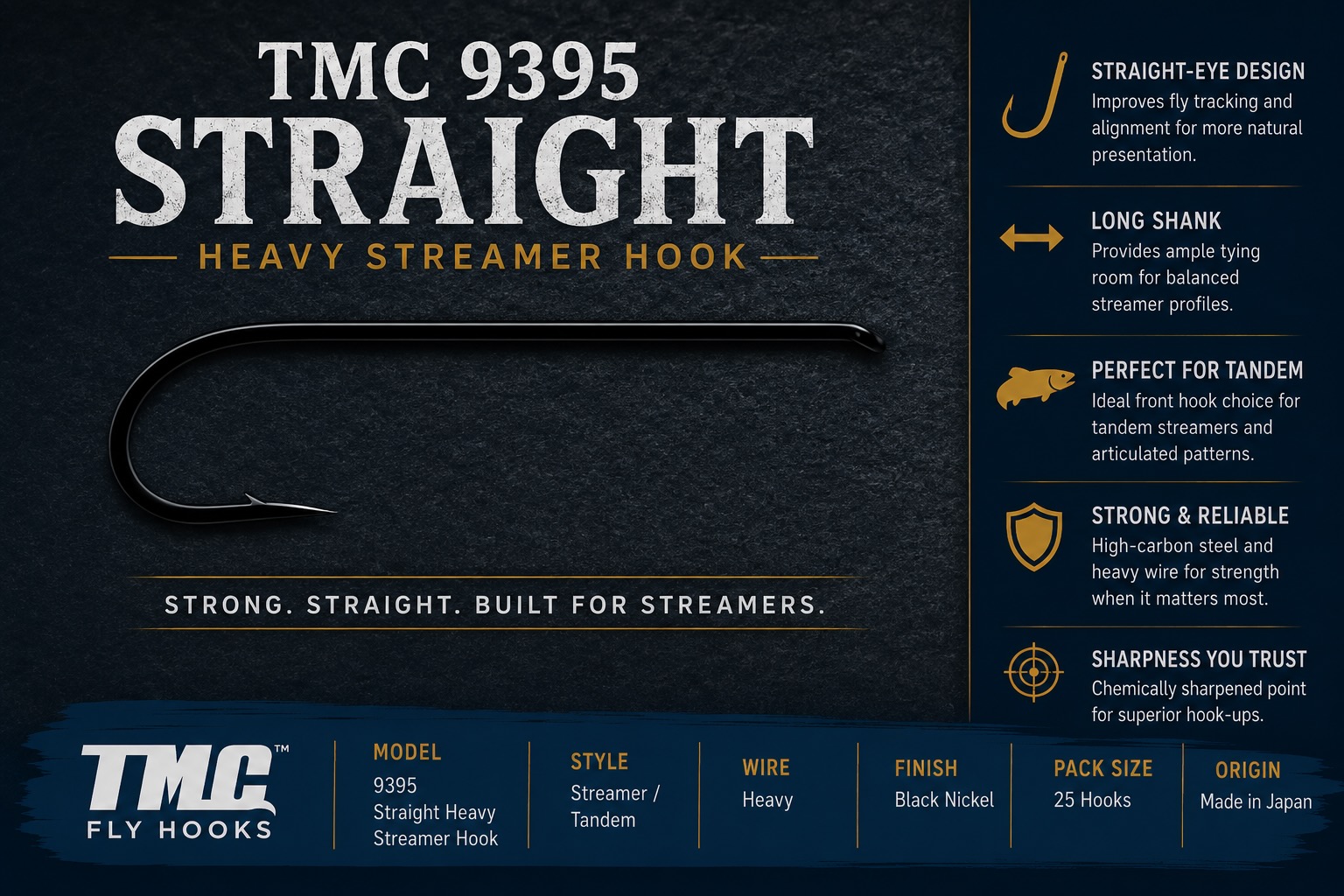
TMC 9395 Straight Heavy Streamer Hook
The Tiemco 9395 straight eye hook has become my preferred front hook choice for tying tandem streamer patterns. Its long shank profile, strong wire construction, and straight eye design provide an ideal foundation for building balanced tandem flies that maintain both excellent swimming action and clean traditional proportions.
What I appreciate most about the 9395 is its versatility. The hook offers plenty of tying space for layering materials and creating smooth tapered bodies, while still maintaining enough strength to confidently handle aggressive fish and larger streamer applications. The straight eye also contributes to a very natural tracking motion in the water and preserves the classic streamer aesthetic that many traditional tandem patterns are known for.
In my tandem streamer setups, I typically use the TMC 9395 as the front hook section paired with a shorter trailing rear hook. This combination creates excellent articulation and movement without excessive bulk or stiffness, allowing materials such as bucktail, schlappen, fox, marabou, and flash blends to pulse naturally during the swing or retrieve.
Living in the USA and interested in purchasing DcTackle Flies? Check out my Etsy Shop at My Etsy Store
All applicable duties and fees reflected in pricing to make purchasing simple. New patterns added weekly
Wide-Gap Streamer Hooks
Modern streamers often incorporate bulky materials like:
- bucktail
- Snow Runner
- Arctic goat
- flash blends
- synthetic fibers
- articulated bodies
Wide-gap hooks improve:
✅ hooking percentages
✅ hook clearance
✅ fish retention
✅ aggressive strike conversion
These hooks are ideal for:
- articulated streamers
- deer hair streamers
- large trout flies
- modern predator baitfish patterns
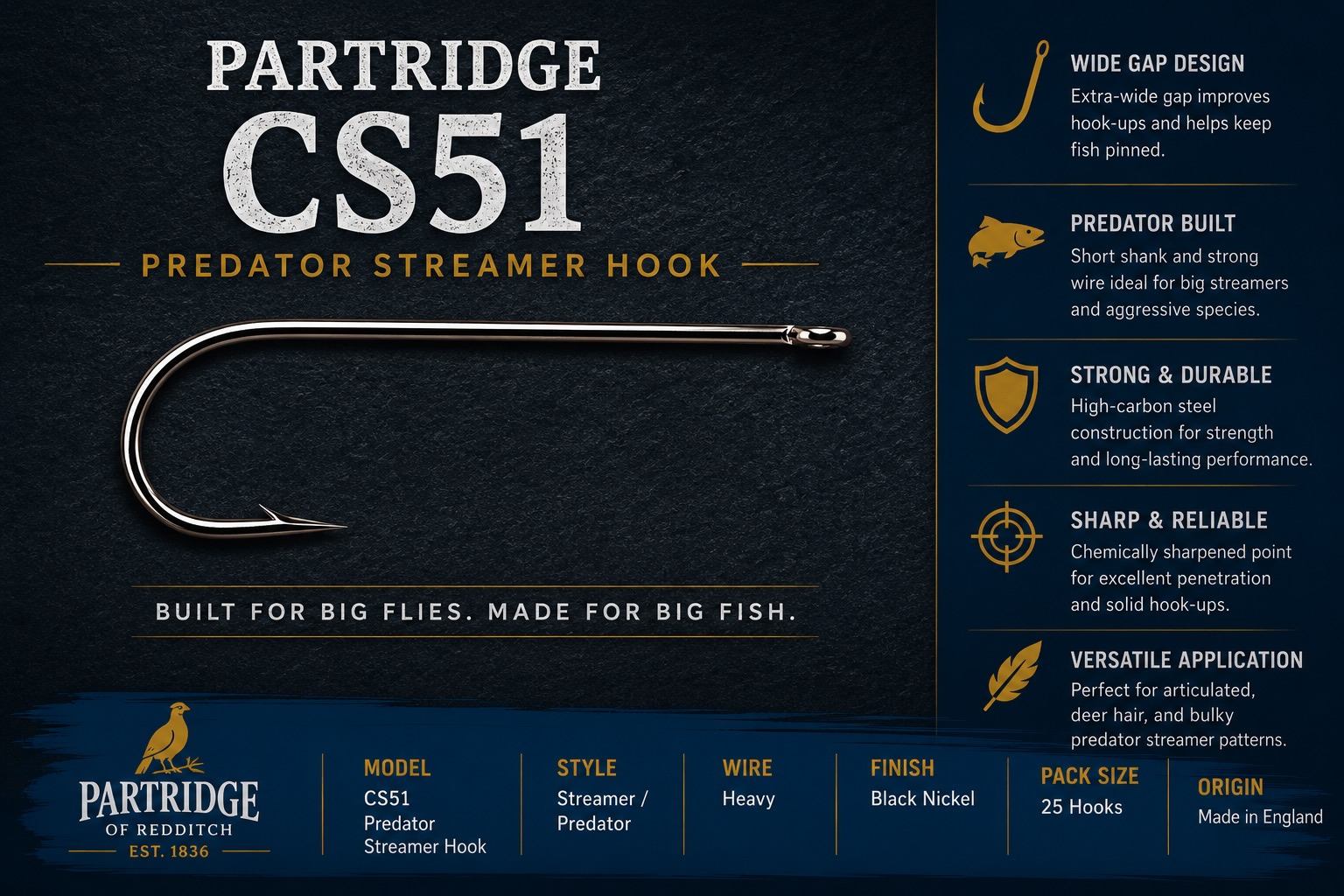
Partridge CS51 Predator Hook
The Partridge CS51 Predator Hook is an excellent example of a modern wide-gap streamer hook designed specifically for large profile flies and aggressive predatory fish. Its shorter shank and oversized hook gap provide outstanding hooking efficiency while still allowing fly tyers to build bulky articulated streamers, baitfish imitations, and predator-style patterns without compromising hook exposure.
What makes the CS51 particularly effective is the balance between strength, gap clearance, and overall fly profile. The wide gape helps prevent materials such as deer hair, schlappen, fox, marabou, and synthetic fibers from interfering with hook penetration, resulting in more consistent hook-ups when fish strike aggressively.
I especially appreciate the CS51 for modern streamer applications where movement and profile are prioritized over excessive hook length. The hook’s geometry allows articulated flies to swim naturally while maintaining excellent holding power during the fight. Its strong wire construction and chemically sharpened point inspire confidence when targeting larger fish in heavy current or aggressive streamer situations.
For modern predator streamers, articulated baitfish patterns, and large-profile trout or salmon flies, the Partridge CS51 Predator Hook offers a highly effective combination of strength, hooking performance, and fishability that fits perfectly into contemporary streamer design.
Hooks for Articulated Streamers
Articulated streamers revolutionized modern fly tying.
Instead of relying on oversized hooks, articulated systems allow tyers to create:
- larger baitfish profiles
- increased movement
- improved hookup percentages
- reduced leverage during fights
Advantages include:
✅ superior swimming action
✅ better strike conversion
✅ more realistic movement
✅ reduced thrown hooks
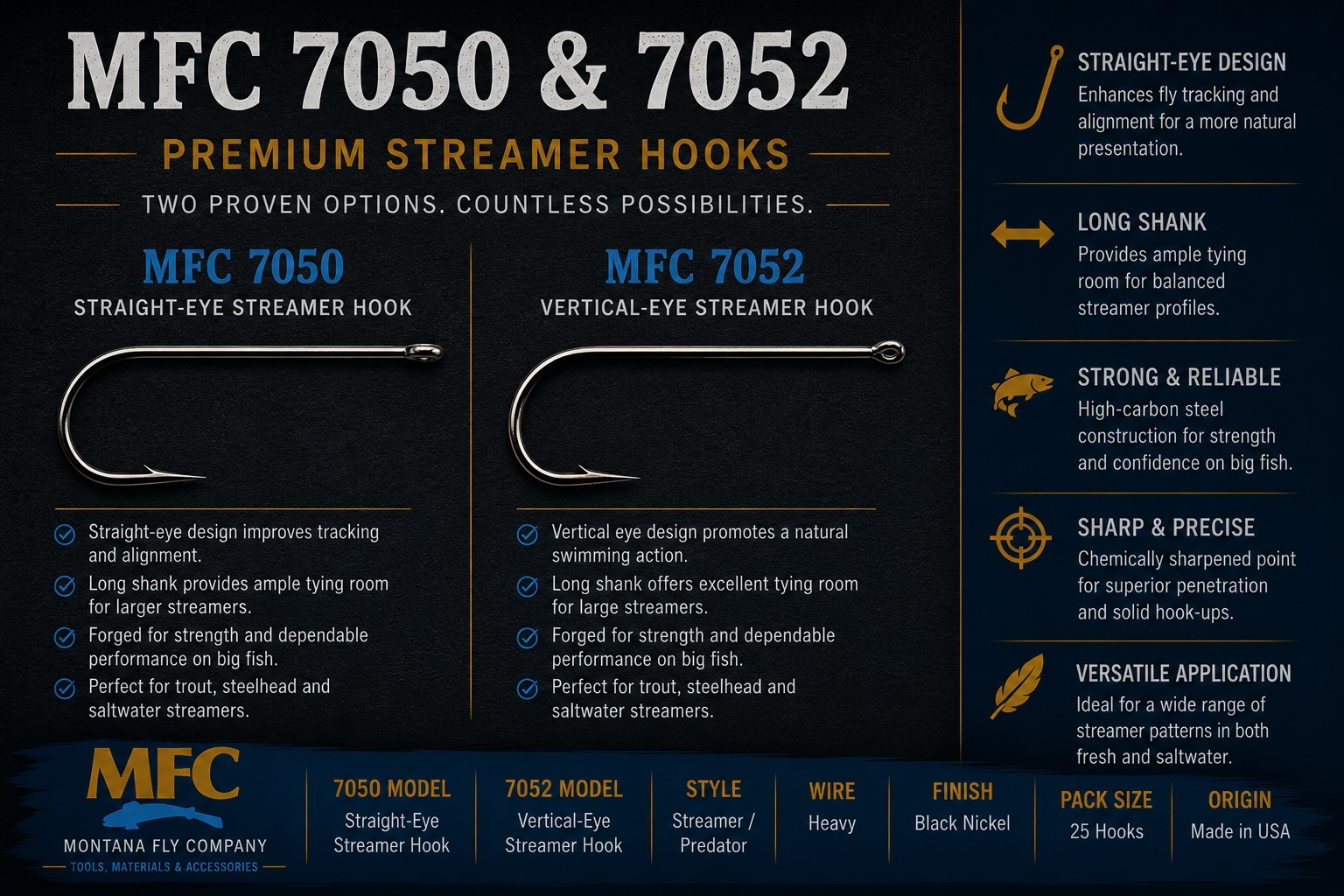
MFC 7050 and 7052 Articulated Streamer Hook System
The Montana Fly Company MFC 7050 and 7052 hook combination has become one of my preferred setups for tying articulated streamer patterns designed for aggressive salmonids and predator fish. Used together, these hooks create an ideal balance between profile, movement, and hooking efficiency while allowing the fly to maintain a fluid, natural swimming action in the water.
I typically use the MFC 7050 as the front shank section to build the primary body and profile of the fly, while the shorter 7052 serves as the rear trailing hook. This combination helps create longer articulated streamers without excessive weight or leverage during the fight, resulting in better movement and improved hook-up retention.
What makes this system especially effective is the versatility it provides for modern streamer design. The hook geometry and strong wire construction handle larger fish confidently, while the articulated connection allows materials such as schlappen, goat hair, marabou, fox, and flash blends to pulse naturally with current and retrieve speed
Professional Fly Tyer Insight
Many modern streamer tyers intentionally use shorter rear stinger hooks on articulated patterns to reduce short strikes while improving hook penetration during aggressive trout eats.
Hooks for Hairwing Streamers
Hairwing streamers continue gaining popularity because of their:
- natural movement
- translucency
- lightweight casting profile
- elegant swimming action
Materials like:
- Arctic goat
- Snow Runner
- bucktail
- fox hair
- synthetic blends
perform beautifully on properly balanced hooks.
Hairwing streamers benefit from:
✅ long shanks
✅ moderate-heavy wire
✅ straight-eye profiles
✅ refined proportions
The Partridge Heritage 9x Long Shank 2XH Streamer Hook
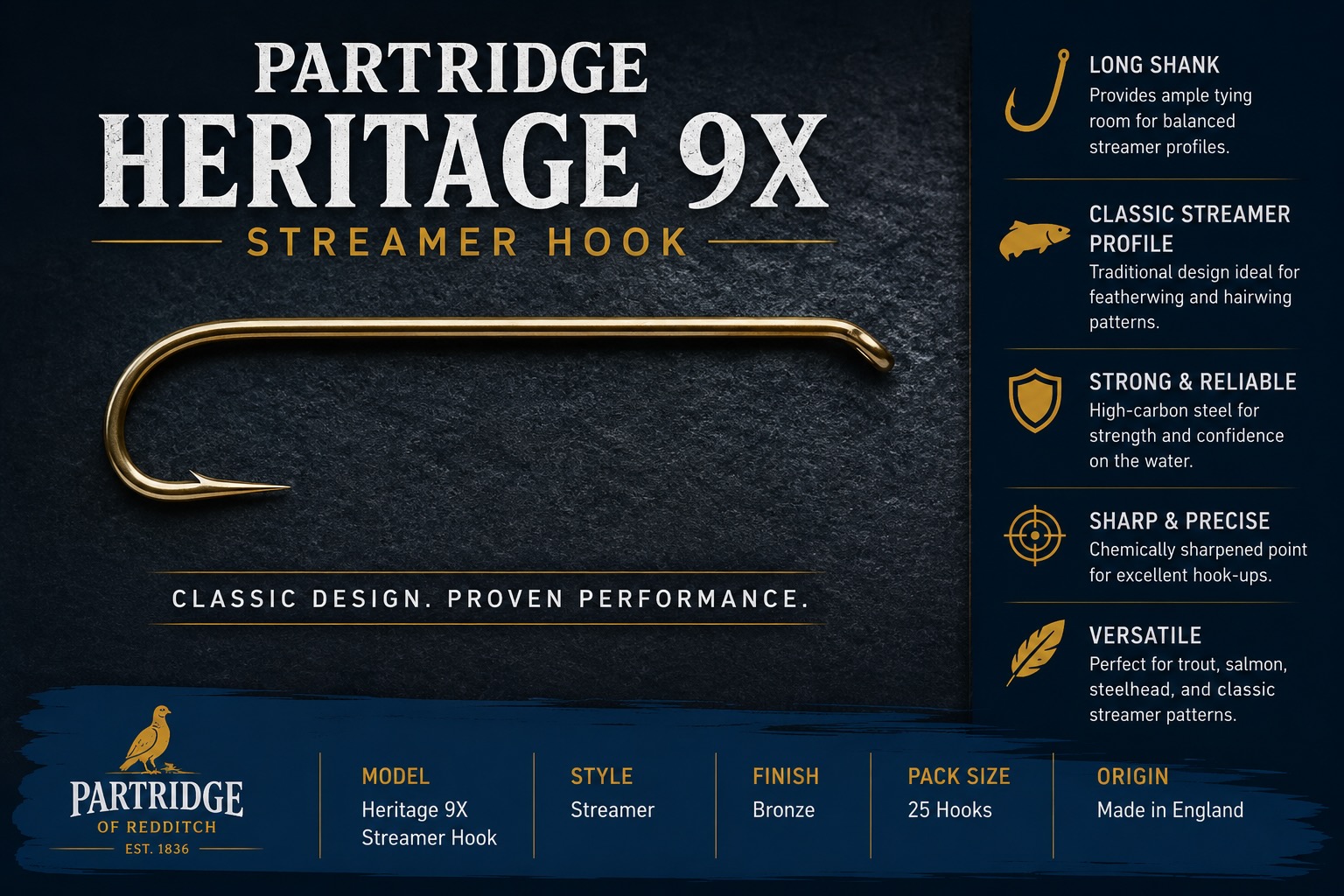
The Partridge Heritage 9X Long Shank Streamer Hook has become my personal hook of choice for tying single hook hairwing streamers. Its extended shank creates an elegant, proportionate profile that is perfectly suited for traditional and modern streamer designs alike, while still maintaining excellent strength and hooking performance.
What I appreciate most about this hook is its balance between classic streamer aesthetics and modern reliability. The refined shape allows materials such as bucktail, goat hair, fox, and schlappen to flow naturally without crowding the hook, resulting in cleaner silhouettes and better movement in the water.
For hairwing streamer patterns specifically, the longer shank also helps create a more natural baitfish profile while providing additional space for layering materials and building smooth tapered bodies. Combined with Partridge’s high-quality finish and sharp point design, it’s a hook that inspires confidence whether tying flies for Atlantic salmon, landlocked salmon, or large trout applications.
Premium Hooks vs Budget Hooks
Every experienced fly tyer eventually learns:
cheap hooks often become expensive mistakes.
Premium hooks provide:
✅ sharper points
✅ superior metallurgy
✅ better consistency
✅ improved tempering
✅ longer durability
Very few things are more frustrating than losing a trophy fish because of:
- a bent hook
- dull point
- poor temper
- hook failure
For serious fly tyers, investing in premium hooks is never an afterthought — it’s part of the foundation of tying truly exceptional flies. That’s why I personally rely on trusted high-end hook brands for every fly I fish myself and every pattern I tie commercially.
For me, it comes down to craftsmanship and confidence. Like many dedicated tyers, I take genuine pride in the flies I create — from material selection and proportions to the final finish at the vise. After investing that level of time, attention, and care into a pattern, compromising on the hook simply isn’t an option.
A quality hook not only improves strength, sharpness, and overall performance on the water, but it also elevates the fly itself. The right hook creates better balance, cleaner proportions, improved swimming action, and ultimately more confidence every time the fly swings through a run.
At the end of the day, a well-tied streamer deserves to be built on the best foundation possible.
Build Better Streamers With the Right Foundation
When it comes to streamer hooks, there is certainly no shortage of choices available to today’s fly tyer. From classic long shank streamer hooks to modern wide-gap predator designs, every manufacturer offers slightly different wire strengths, shank lengths, hook geometries, eye configurations, and intended applications. What works exceptionally well for one style of streamer may not necessarily be the best choice for another.
Ultimately, selecting the right hook comes down to understanding the type of fly you are trying to create and how you intend to fish it. Traditional featherwing and hairwing streamers often benefit from longer elegant shanks that maintain classic proportions, while modern articulated and predator-style streamers frequently prioritize wide gaps, stronger wire, and improved hooking efficiency.
Over time, most streamer tyers naturally develop personal preferences based on confidence, tying style, and on-the-water experience. Some hooks simply “fit” certain patterns better, balance materials more effectively, or produce the movement and profile a tyer is looking for. In many ways, choosing streamer hooks becomes part of the creative process itself.
The good news is that today’s fly tyer has access to an incredible range of high-quality hook options capable of supporting everything from classic salmon streamers to modern articulated baitfish patterns. Experimenting with different models and configurations is often the best way to discover what works best for your own tying style, fishing conditions, and confidence on the water.
Every great streamer begins with the right hook.
Whether you're tying articulated trout streamers, sleek hairwings, or aggressive predator baitfish patterns, choosing premium hooks helps improve:
- durability
- movement
- balance
- sink rate
- hookup performance
At DcTackle & Outdoor Supply, we carefully select streamer hooks trusted by serious fly tyers and passionate fly fishing adventurers alike — because confidence starts at the vise and carries all the way to the river.
🎣 Explore our growing collection of premium streamer hooks, fly tying materials, and modern streamer components designed for anglers who chase unforgettable fish in wild places.
Get new fly recipes, fishing reports, and exclusive offers delivered right to your inbox
.png)


