
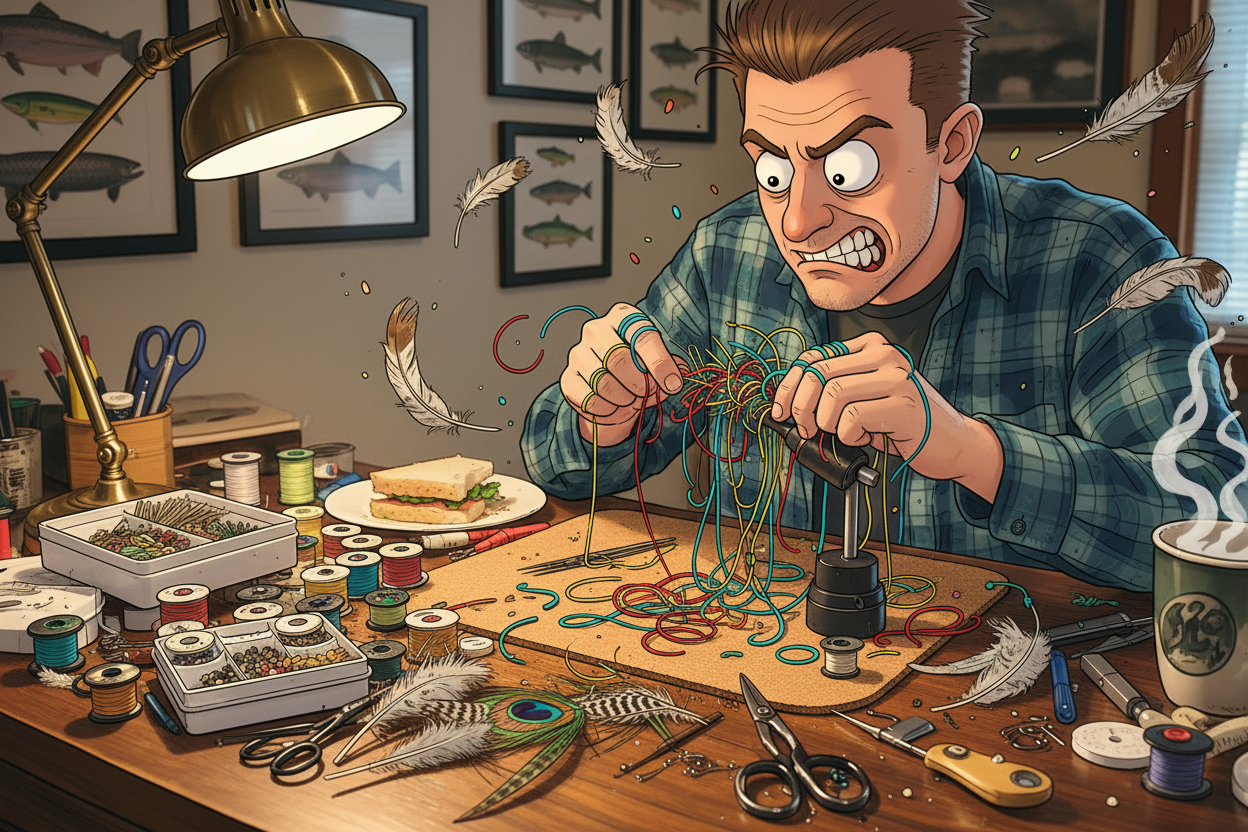
Fly tying has a reputation.
To some, it’s a romantic, almost mystical craft—quiet evenings at the vise, feathers neatly laid out, flies that look like miniature works of art. To others, it’s a black hole of expense, clutter, and frustration that somehow turns a simple fishing hobby into a full-blown obsession.
Which one are you?
For me I think the "black hole of expense" has a ring to it but that is my own doing but in recent years I have slowly learned to control the urge to buy (but hardly ever try) every new material that comes on the market. And there are "lots" of them.
The truth? Both views are right.
Fly tying can be one of the most rewarding extensions of fly fishing you’ll ever experience—but it also comes with challenges that most beginners don’t hear about until they’re already waist-deep in hooks, dubbing, and half-finished patterns.
If you’re thinking about starting fly tying, here are 10 things you should know first—both the good and the bad—so you can decide with clear eyes and realistic expectations.
1. Fly Tying Is Incredibly Rewarding… But It’s Not Instant Gratification
The Positive
Few moments in fly fishing compare to landing a fish on a fly you tied yourself. That sense of connection—to the fish, the water, and your own craftsmanship—is deeply satisfying. Fly tying also slows you down, sharpens your attention to detail, and gives you a creative outlet during the off-season.
For many of us who finds a need to satisfy that "left brain" or is it the "right brain" I can never remember fly tying does serve to fufill that creative need many of us have
The Reality Check
Your first flies will not look good.
They may barely resemble the pattern you were aiming for.
There’s a learning curve—steep at times—and it takes patience to develop clean proportions, proper thread control, and material handling. If you’re expecting instant results, frustration can set in quickly.
I remember when I started (40+ years ago) My first flies (copied from "Hairwing Atlantic Salmon Flies by Keith Fulsher, Charles Krom" where they used a mixture of strands of floss in the wing instead of hair. Something which is unheard of today and honestly didn't produce very nice looking flies yet I stuck with it and filled my first box of flies. (Most of which never seen the river by the way)
Those were the days before the internet and youtube when learning to tie involved books and more books and if you were lucky maybe someone to show you the basics (which was the case for me - about 30 minutes of the basics and off I went!)
Truth: Fly tying rewards persistence, not speed.
2. It Can Save You Money… But Often Doesn’t (At Least at First)
The Positive
Once you’re proficient, tying your own flies—especially streamers, salmon flies, or saltwater patterns—can be more cost-effective than buying premium flies. You’ll also be able to repair, modify, and replace patterns as needed.
The Reality Check
Starting fly tying is expensive.
A quality vise, tools, hooks, thread, feathers, hair, synthetics—it adds up fast. Many beginners spend far more than they expect chasing materials for every pattern they see online.
This is true of any hobby when you look at it. Starting out when you invest in quality often expensive tools results in some major misgivings about how much this hobby is really going to cost?
But don't give in to the urge to 'go cheap". You will regret it!. Junk tools and materials produce junk flies and result in you throwing in the towel long before you should.
Truth: Fly tying becomes economical over time, but it is rarely cheap in the beginning.
3. You Don’t Need Every Tool… But Quality Matters
The Positive
You can start tying flies with surprisingly few tools:
- A solid vise
- Bobbin
- Scissors
- Hackle pliers
- Whip finisher
That’s it.
The Reality Check
Cheap tools can slow your learning and cause unnecessary frustration. Poor scissors, rough bobbins, or unstable vises will fight you at every step.
See my comments in the preceeding section. Always by the highest quality tools and materials you can afford. That’s my motto!
Truth: You don’t need many tools—but the ones you buy should be good ones.
4. Materials Are Addictive (And That’s a Slippery Slope)
The Positive
Fly tying opens up a world of materials—natural and synthetic—that allow endless creativity. You’ll learn how subtle changes in color, texture, and movement can dramatically affect how a fly fishes.
The Reality Check
It’s easy to overbuy.
Many beginners accumulate bins of materials they’ll never use because a pattern called for one small pinch of something obscure.
When someone asks me "what materials should I buy to start tying flies?" I always start with the following: Start with a small list of flies you would like to tie and buy only the materials you need to tie these. Often you will find one material will cover a number of patterns. Master these and build your stock of materials from there adding to your pattern library only as you need based on the flies you know you will actually fish.
Don't go down the rabbit hole of "buying a little of everything" You will find yourself with drawers full of materials that never see the light of day. Trust me. I've been there!
Truth: Buy materials intentionally. Patterns first, materials second—not the other way around.
5. Fly Tying Improves Your Fishing (Even If You Never Fish Your Own Flies)
The Positive
Tying flies teaches you how patterns are built, how they behave in water, and why certain designs work. This knowledge translates directly into better fly selection, presentation, and confidence on the river.
This is especially true in relation to how various materials act within the water. Their action (or inaction), silhouette, profile, etc. etc. This is particularly true as you move into the realm of baitfish imitations (streamers, sculpins, etc.)
The Reality Check
You won’t automatically become a better angler overnight. Tying flies doesn’t replace time on the water—it complements it.
Truth: Fly tying makes you a more thoughtful angler, not a shortcut to success.
6. You Will Tie Flies That Never See Water—and That’s Normal
The Positive
Some flies are learning exercises. Others are experiments. Some are simply practice runs. Fly tying builds muscle memory and understanding even when the fly itself is destined for the scrap bin
I personally tied hundreds of flies tat I have never used. Many of which I have stored away but most of which have been given away over the years. Its part of building skill and treat it as learning exercises. If you are really cost conscious you could always stip them down again later to reuse the hooks (although really how many of us actually do this!)
The Reality Check
Many beginners feel guilty or discouraged when flies don’t “make the cut.”
They shouldn’t.
Truth: Failed flies are not failures—they’re tuition.
As they say "you learn more from your failures than your successes" So doing worry about failing to produce perfect flies from the start. Concentrate on improving quality/proportions and building consistency
7. Precision Matters More Than Artistic Talent
The Positive
You don’t need to be an artist to tie effective flies. Proportion, durability, and material control matter far more than decorative flair.
The Reality Check
Sloppy flies often fall apart quickly or don’t fish well. Fly tying rewards attention to detail—thread tension, clean tie-ins, proper spacing.
Truth: Fly tying is craftsmanship first, creativity second.
8. You’ll Develop Strong Opinions (And That’s Part of the Culture)
The Positive
Fly tying is rich with tradition. There are classic patterns, regional styles, and time-tested techniques that connect you to generations of anglers and tyers.
The Reality Check
Fly tying culture can be opinionated—sometimes intensely so. You’ll hear debates about materials, methods, and “the right way” to tie a fly.
This is something that rings true to me. Although I always try to stick to the 'spirit" of the pattern especially if using its original name I don't hesitate to change material choices and in the last few years have started to move more into my own creations of at least major adaptations of originals which utilize modern materials.
This is the true creative nature of the hobby! Don't be so rigid. Embrace that creative side. It will always keep the hobby new and fresh! At least that’s my thoughts!
Truth: Learn the rules, then decide which ones matter to you.
9. Fly Tying Is Quiet—But Not Always Relaxing
The Positive
Many people turn to fly tying as a form of relaxation. The repetitive motions, focus, and rhythm can be meditative.
The Reality Check
When you’re learning, fly tying can be mentally demanding. Mistakes, thread breaks, and material slip-ups can raise blood pressure faster than expected.
When this happens "walk away" and come back later. I use the same strategy in wood working although the consequences of a mistake at the table saw can be much more life altering than at the vise! I am sure there are many out there who know what I mean
Truth: Relaxation comes with familiarity. Stress is part of the learning phase.
10. Fly Tying Is a Long-Term Relationship, Not a Weekend Project
The Positive
Fly tying grows with you. As your skills improve, so does your appreciation for subtlety, efficiency, and design. It’s a hobby that can last a lifetime and evolve alongside your fishing.
The Reality Check
If you’re only interested in tying a handful of flies quickly, fly tying may not hold your interest long-term.
Truth: Fly tying rewards commitment more than casual dabbling.
I have on occasion over the years taken long breaks between concentrated fly tying especially when the kids were small, work was busy and life's stresses were sometimes overwhelming. But no matter how long I broke from the hobby I always came back to it and many times with a new vigor. This is especially true in recent years where I seem to tie more and varied flies now than I ever did. It has always been that consistent hobby (among many) that I has always been that anchor for me!
Final Thoughts: Is Fly Tying Worth It?
Fly tying isn’t for everyone—and that’s okay.
It requires patience, space, money, and time. It asks you to fail repeatedly before succeeding. It tempts you to buy more materials than you’ll ever need. And it will absolutely consume more of your attention than you expect.
But for those who stick with it?
Fly tying becomes far more than a way to make flies.
It becomes a deeper connection to fishing, nature, and craftsmanship.
If you’re curious, start small. Choose a few proven patterns.
Invest in quality basics. Accept that your early flies won’t be perfect
Because once fly tying gets under your skin—it rarely lets go.
And most tyers wouldn’t have it any other way.
The only other thing to add is having an understanding partner helps! I think I'll end on that note! lol
Happy tying everyone!
And hey — if you run out of patience, you can always grab a few hand-tied patterns from us at DcTackle.ca — we promise we’ve already worked through all the frustrations 😄
Get new fly recipes, fishing reports, and exclusive offers delivered right to your inbox
.png)
Some of the links in this article are affiliate links, which means I may earn a small commission if you choose to make a purchase through them — at no additional cost to you. I only recommend products and tools that I personally use, trust, or believe add genuine value. These commissions help support the continued creation of free content on this site.


